Author: mfordfeeney

  • Radioland Murders (1994)

    Radioland Murders (1994)

    140 Character Movie Review – #140RVW

    Love letter to old-time radio from Lucas relies too heavily on slapstick but is otherwise a wonderful, fun picture and an overlooked gem…

    Radioland Murders

    Spoiler-free Movie Review of Radioland Murders:

    Understatement of the year: George Lucas has certainly gotten a lot of mileage out of his childhood interests. Most of his biggest successes stem from things near and dear to him as a child or young man. Serial films, car racing, 50’s music and culture – all of these are direct influences in American Graffiti, Star Wars & Indiana Jones. His love of old-time radio shows would therefore provide the inspiration for a new story, Radioland Murders.

    Radioland Murders

    Lucas gave the story to the husband/wife team of Willard Hyuck & Gloria Katz, whose screenplay was put into pre-production by Universal shortly after the release of American Graffiti. It was languishing but still alive after the release of the original Star Wars, with Cindy Williams and Steve Martin reportedly committed to play the leads. (That bit of casting actually probably would have worked quite well.) For whatever reason, execs thought the period comedy wouldn’t play and it went into development hell. (Odd considering the studio’s success with the period comedy Graffiti.)

    The picture would be revived in the early 1990’s as Lucas’s Industrial Light & Magic (ILM) had developed their effects production to the point where the picture could be made for a (relatively) small budget. (No, it’s not really a big FX picture, but there are a lot of mattes.)

    Radioland Murders

    They hired Moonlighting writers Jeff Reno & Ron Osborn to update the script a bit for modern audiences, and the studio stocked the ensemble cast with familiar faces. The idea of updating a 1930’s setting for 1990’s audiences sets off all kinds of alarms, but it really works fine; the tone is surprisingly appropriate and consistent.

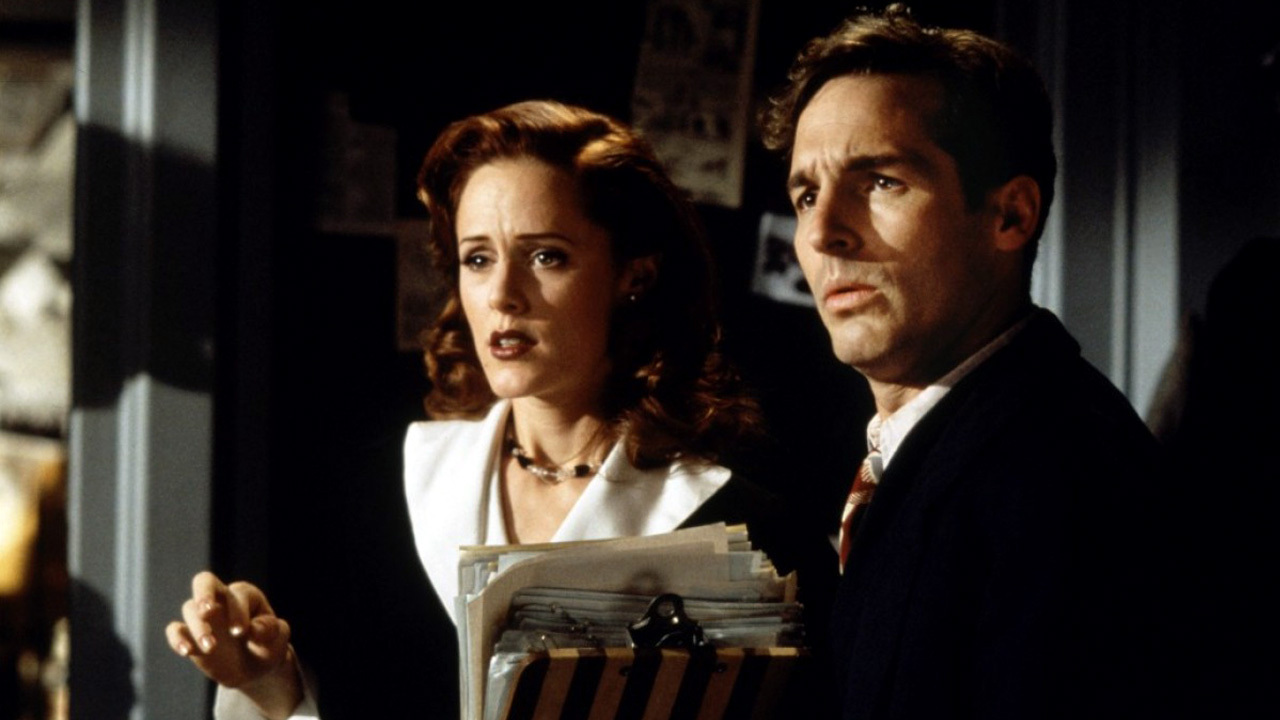
    The story that made it to screen is typical screwball comedy, mixed with a murder mystery. Set in 1939, the picture follows married but separated couple Roger & Penny Henderson (Brian Benben & Mary Stuart Masterson) on one hectic opening night at new radio station WBN in Chicago. Station owner General Walt Whalen (Ned Beatty) is trying to launch a new national radio network and needs everything to go perfectly. Of course, he’s in for a long night: the sponsor hates all of the material, forcing the unpaid writers to come up with all new material on the spot; his son is totally incompetent as the director – that is, when he can be drawn away from having an affair with the stage manager’s wife; virtually every staff member is openly feuding; and, oh yeah, a mysterious voice is repeatedly cutting into the broadcast shortly before committing a series of murders.

    Radioland Murders

    The pace of the film is terrific, keeping the action madcap and the zingers coming. The escapades are very funny and the ensemble cast is perfectly able to keep the snappy dialogue and physical comedy sharp. The only real problem is that it doesn’t know when to quit; the slapstick just keeps going. It’s great for the first act but is really hard to sustain for 112 minutes. It just gets to be a bit much. I don’t actually think the length of the film is a problem, even though that’s pretty ambitious for comedy. But the best thing about the film is also the worst – you just don’t get a second to breathe.

    Radioland Murders

    If the slapstick and physical humor is overdone, it’s certainly done well. The relatively unknown Benben seems made for this part and Masterson is equally adept at the His Girl Friday pace. The action is captured by English tv director Mel Smith and DP David Tattersall. It’s actually quite amusing to look through the credits on this picture, as so many of the names were those that we’d be seeing again quite soon for The Phantom Menace. As much as The Young Indiana Jones Chronicles, Radioland Murders functioned as a type of farm system for the team that would make the Star Wars prequels. With hindsight you can see how everything Lucasfilm did in the late 80’s into the 1990’s was all by way of preparing for a new kind of filmmaking that Lucas wanted in order to revisit the galaxy far, far away.

    Radioland Murders

    If all that Radioland Murders accomplished was to further techniques for making future films, it would have to be viewed as a success. It certainly wasn’t categorized as a win in any other measure at the time. The film was mostly panned by critics and an absolute flop at the box office, not even approaching it’s still minor budget of $15 million. It was nearly five years after release before I even heard about it. And that is all very unfortunate, because I love this picture. It is very well made, with a sensational ensemble cast and a great sense of fun.

    There’s a wonderful musical quality to the picture. The rhythms of the action pieces are interwoven with the various songs of the period in a very effective manner and the time period as depicted is simply a gas. It’s a wonderful setting. Michael McKean as the clearly Spike Jones-inspired bandleader looks like he’s having the time of his life, and he certainly gets some of the most enthusiastic work.

    Radioland Murders

    I want you to see just some the people who show up in this picture:

    • Michael Lerner
    • Brion James
    • Stephen Tobolowsky
    • Michael McKean
    • Corbin Bernsen
    • Bobcat Goldthwait
    • Jeffrey Tambor
    • Larry Miller
    • Christopher Lloyd
    • Harvey Korman
    • George Burns (his last film)
    • Joey Lawrence
    • Peter MacNicol
    • Robert Klein
    • Rosemary Clooney (her last film)

    Radioland Murders

    Yes, it’s too frenzied and could do with a few quiet moments, but Radioland Murders is a funny movie that is very worthwhile and sadly overlooked. Recommended.

    Poster:

    Trailer:

    Bechdel Test:

    Pass

    The Representation Test Score: C (6 pts)

    (http://therepresentationproject.org/grading-hollywood-the-representation-test/)

    Radioland Murders Representation Test


    [schema type=”movie” url=”http://lucasfilm.com/radioland-murders” name=”Radioland Murders” description=”At the launch of Chicago’s WBN radio station and the premiere of its inaugural radio drama, a murder mystery unfolds. The show goes on — as do the murders. But who is the killer?” director=”Mel Smith” actor_1=”Mary Stuart Masterson” actor_2=”Brian Benben”]

    Main Cast Brian Benben Roger Henderson, Mary Stuart Masterson Penny Henderson, Ned Beatty General Walt Whalen, George Burns Milt Lackey
    Rating PG
    Release Date Fri 21 Oct 1994 UTC
    Director Mel Smith
    Genres Comedy, Crime, Drama, Musical, Mystery, Romance
    Plot In 1939, WBN, a fourth radio network, is about to take to America’s airwaves. As if the confusion of the premiere night wasn’t enough…
    Poster Radioland Murders
    Runtime 108
    Tagline At station WBN, the hits just keep on coming.
    Writers George Lucas (story), Willard Huyck (screenplay) …
    Year 1994
  • Pines: Book One of the Wayward Pines trilogy (2012)

    Pines: Book One of the Wayward Pines trilogy (2012)

    Pines
    Pines by Blake Crouch

    My rating: 5 of 5 stars

    Wow. What an amazing book.

    I’m really enjoying my reading lately – I just keep bouncing from author to author. I’ve never been so open to suggestion. I read a thriller or sci-fi novel, love it, and see who the author rubs shoulders with. So many of these writers play in each others sandboxes. I always loved guys like William Gibson & Neal Stephenson, and Ernest Cline & Wil Wheaton turned me on to John Scalzi. Hugh Howey’s worlds led me to Jason Gurley, Michael Bunker and Marcus Sakey, from which I got to Brett Battles and now Blake Crouch.

    Most of the time these are authors I’m already aware of; Scalzi’s Redshirts was on my wish list for years before I finally read it. But it’s when I see the same names popping up it convinces me to take the plunge. (I should point out that I am quite a slow reader, so I put more thought into what I’m going to read than some might. My kindle is filled with books I haven’t gotten to yet…)

    In the case of Pines, I’d seen this popping up with increasing frequency based on my recent reads, which convinced me to give it a try even though it appeared to be a bit out of my usual areas of interest; by which I mean it looked like horror. I’m not a big horror fan, so the thriller aspects of a horror story have to be very compelling to keep me engaged past my squeamishness comfort level. Compelling is certainly a good word for Pines

    Pines tells the tale of Secret Service Agent and Gulf War veteran Ethan Burke, who finds himself in the rustic town of Wayward Pines, a slice of Rockwellian Americana nestled in the mountains of Idaho. He came there to investigate the disappearance of two agents, but a brutal car accident has killed his partner and left him a confused wreck with partial amnesia. He can’t locate his belongings, his identification or anyone who seems completely sane. The more he learns the less he knows, but he is certain of one thing: this place is dangerously strange…

    Intentionally filled with the atmospheric influence of Twin Peaks, Pines (the 1st book in the Wayward Pines trilogy) does indeed have an eerie quality, although I’m not sure I’d call the novel horror. There’s a “something is very wrong here” vibe to everything, and from that environment and the descriptions, your interest may not be totally piqued. I found the beginning of the novel to be interesting but a bit familiar. But things changed quickly.

    I may never have read a book to which the word momentum so readily comes to mind. The book starts off a little slowly, but I didn’t realize it was because a train takes a while to get to the top of the mountain. I was steadily more drawn in as the protagonist begins to get a grip on what’s happening, but when it hit the tipping point I was completely snagged and had to stay up far later than was wise because I needed to know where we were going.

    The author does a fine job taking the familiar, Twilight Zone type premise and giving it a great twirl. Pines is extremely engaging. It comes as absolutely no surprise that Fox has adapted the novel into a 10-part series to air in 2015. http://www.fox.com/wayward-pines/

    Highly recommended. Time to start book two…

    [schema type=”book” url=”http://www.blakecrouch.com/” name=”Pines” description=”Secret service agent Ethan Burke arrives in Wayward Pines, Idaho, with a clear mission: locate and recover two federal agents who went missing in the bucolic town one month earlier. But within minutes of his arrival, Ethan is involved in a violent accident. He comes to in a hospital, with no ID, no cell phone, and no briefcase. The medical staff seems friendly enough, but something feels…off. As the days pass, Ethan’s investigation into the disappearance of his colleagues turns up more questions than answers. Why can’t he get any phone calls through to his wife and son in the outside world? Why doesn’t anyone believe he is who he says he is? And what is the purpose of the electrified fences surrounding the town? Are they meant to keep the residents in? Or something else out? Each step closer to the truth takes Ethan further from the world he thought he knew, from the man he thought he was, until he must face a horrifying fact—he may never get out of Wayward Pines alive. Intense and gripping, Pines is another masterful thriller from the mind of bestselling novelist Blake Crouch.” author=”Blake Crouch” publisher=”Thomas & Mercer” pubdate=”2012-08-21″ isbn=”1612183956″ ebook=”yes” paperback=”yes” ]

  • Pulp Fiction (1994)

    Pulp Fiction (1994)

    140 Character Movie Review – #140RVW

    Very clever. Possibly too clever for its own good, as the hugely stylized film can come off as pretentious (which it is). Still brilliant…

    Pulp Fiction

    Spoiler-free Movie Review of Pulp Fiction:

    Ahh, Pulp Fiction. Hard to remember a time when we didn’t know of this movie or feel its influence. It was a huge wake-up call to old Hollywood when it dropped in 1994. Does it still work as well twenty years later? Hell, I’m not sure it was still as effective twenty months later.

    Pulp Fiction

    It’s so stylized and affected that it was kind of born with a short shelf life. Without wishing to take anything away from what is still a very fine film, I’d argue that Pulp Fiction achieved more with its shock value than it could sustain with its quality.

    Pulp Fiction

    It’s just such a weird film of contradictions; the dialogue feels so hip and of the moment that it is almost instantly dated, which makes no sense when you consider that the whole style of the film is retro-pastiche. It’s heralded for its visionary originality even while virtually every part of the picture is a homage to something that has come before.

    Pulp Fiction

    Which raises the question is it still theft if you tell everyone about it? Director & co-writer Quentin Tarantino has always been extremely forthcoming about his influences, positively delighting in drawing a spotlight to unheralded works that he loves. Possibly no filmmaker has been more complimentary to the cinematic legacy before him or more generous with praise and resources, using his fame to further support his influences. But is that something we should congratulate him for or demand from him? Is he doing a good thing or merely the right thing considering how freely he appropriates the work of others? Even if you give credit, isn’t Pulp Fiction just a cinematic mix-tape?

    Pulp Fiction

    Putting aside these considerations, Pulp Fiction is still a fantastic picture. The non-linear story structure was really refreshing, even if it led to many other lesser filmmakers trying it on. The same can be said for the “too cool for school” dialogue and characters, and it is probably this reason that leads me to view the film a little harsher in retrospect. Nothing in the film is necessarily any more self-aware or intentionally cool than that in Tarantino’s previous effort, Reservoir Dogs, but it all combines for an overwhelming effect here.

    Pulp Fiction

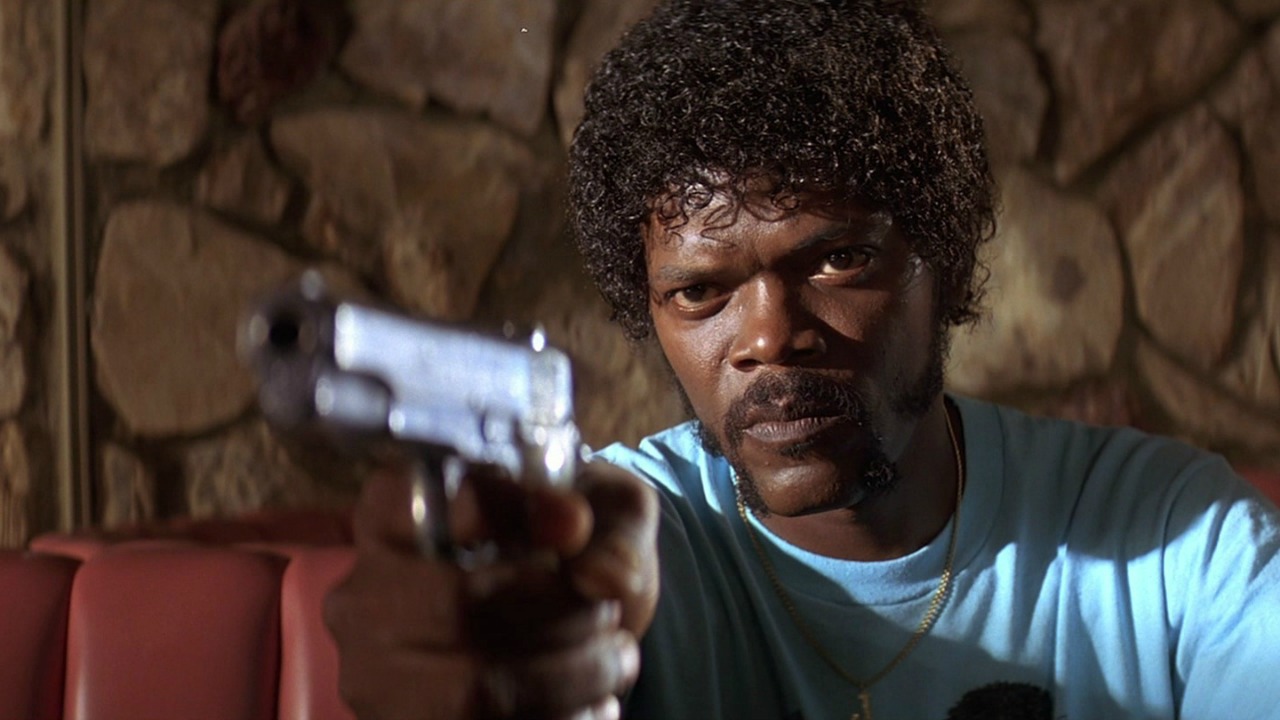
    The casting of John Travolta was a stroke of genius, even if it did inadvertently lead to Battlefield Earth, and the rest of the casting is similarly inspired. Not only did the film revive the career of Travolta, it signaled a new direction and credibility for Bruce Willis. Incidentally, the first choice for the character of Vincent Vega was Michael Madsen, not Travolta. It’s hard to imagine that Madsen was ever anyone’s first choice for anything, ever, anywhere, but can you even picture him in this role? I’d go as far as to say that the picture would have been dead on arrival. That’s how important I think the casting was to this picture.

    Pulp Fiction

    The picture is quite simply startling in its frank visualizations of violence, if perhaps less so than Reservoir Dogs. I guess I’d have the same comment about a lot of the elements of this film; great, but less great than Reservoir Dogs. I just frankly think it’s a better picture – more direct and less image-conscious.

    Pulp Fiction

    Pulp Fiction gets credit for bringing independent film to the multiplex and kicked off a golden age for same. This is complete nonsense, of course – the film was backed by Disney-owned Miramax and featured Bruce Willis. But is is completely true that it brought an indie sensibility to a larger audience. Unfortunately, it brought a whole lot of baggage with it, not least of which being amoral anti-heroes, violent shoot-outs with “cool” criminals and casual use of the n-word. But it did create an environment in which edgier material could find a home, and for that we should all be grateful.

    Pulp Fiction

    Pulp Fiction has been with us for twenty years and it’s still a good movie. At least I think it is. I’m not watching it again to find out since I saw enough of this movie in college to last me a lifetime. Seriously, if this movie came out when you were in school you’d know you couldn’t walk from one end of a dorm hallway to the other without hearing the music, film or somebody quoting it. Maybe that’s the real reason I seem sort of down about the film that I once loved so much. For my money, though, I’d go with Jackie Brown

    Poster:

    Trailer:

    Bechdel Test:

    Pass

    The Representation Test Score: D (3 pts)

    (http://therepresentationproject.org/grading-hollywood-the-representation-test/)

    Pulp Fiction Representation Test

    [schema type=”movie” name=”Pulp Fiction” description=”The lives of two mob hit men, a boxer, a gangster’s wife, and a pair of diner bandits intertwine in four tales of violence and redemption.” director=”Quentin Tarantino” actor_1=”John Travolta” actor_2=”Uma Thurman” actor_3=”Samuel L. Jackson” actor_4=”Bruce Willis” actor_5=”Ving Rhames” actor_6=”Tim Roth” actor_7=”Frank Whaley” actor_8=”Eric Stoltz” actor_9=”Harvey Keitel”]

    Main Cast John Travolta Vincent Vega, Uma Thurman Mia Wallace, Samuel L. Jackson Jules Winnfield, Bruce Willis Butch Coolidge
    Rating R
    Release Date Fri 14 Oct 1994 UTC
    Director Quentin Tarantino
    Genres Crime, Drama, Thriller
    Plot The lives of two mob hit men, a boxer, a gangster’s wife, and a pair of diner bandits intertwine in four tales of violence and redemption.
    Poster Pulp Fiction
    Runtime 168
    Tagline Girls like me don’t make invitations like this to just anyone!
    Writers Quentin Tarantino (story) and, Roger Avary (story) …
    Year 1994
  • The Shawshank Redemption (1994)

    The Shawshank Redemption (1994)

    140 Character Movie Review – #140RVW

    Overshadowed by Pulp Fiction upon release, Shawshank is an absolute masterpiece. Career highlight for Darabont, Freeman, Robbins, Deakins…

    The Shawshank Redemption

    Spoiler-free Movie Review of The Shawshank Redemption:

    Where do you start with a movie this good?

    The Shawshank Redemption

    The Shawshank Redemption was viewed favorably by critics upon its limited release on September 23, 1994, but was all but ignored when it went into wide release on 10/14/1994. I was an enormous Stephen King fan in high school and the first few years of college, so I was familiar with Rita Hayworth and the Shawshank Redemption, the novella on which this film is based. I loved the story, but even I couldn’t get anyone to go see the movie with me. The reason? A little movie called Pulp Fiction came out the same day.

    The Shawshank Redemption

    I wonder if anyone today would make the same choice. Pulp Fiction was a landmark film and arguably changed filmmaking (although I’m not sure if for the better), but I don’t think I’ll get much argument when I suggest that Shawshank is a much better film.

    The Shawshank Redemption

    With a movie this classic, it’s hard to know to where to attribute the success. The story, the characters, the acting, the direction, the music, the cinematography, the art direction – these are all top shelf.

    The Shawshank Redemption

    Some people still haven’t seen the film; I know I’ve had more than one discussion with someone who just doesn’t want to watch a prison movie. I get that. But please try – it’s just so much more than that.

    The Shawshank Redemption

    For those few, The Shawshank Redemption finds banker Andy Dufresne (Tim Robbins) sent to Shawshank State Penitentiary in Maine in 1947 for murdering his wife and her lover. Shawshank is a brutal prison with merciless guards, headed by Captain Byron Hadley (Clancy Brown) whose methods are approved of by Warden Samuel Norton (Bob Gunton), not to mention the frequent assaults by other prisoners such as Bogs Diamond (Mark Rolston). Andy would likely not survive in prison were it not for his financial acumen, which makes him useful to the warden.

    The Shawshank Redemption

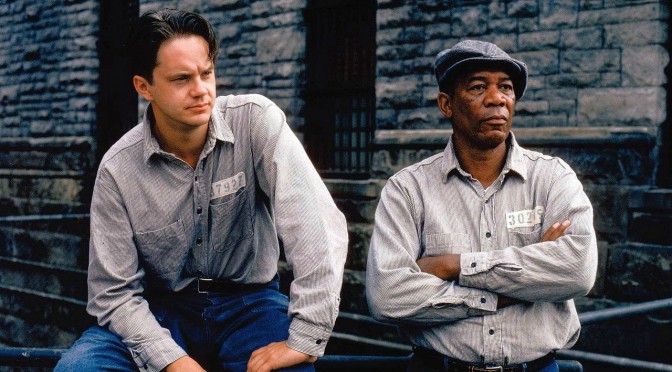
    The real reason Andy is able to get along in prison, however, is his friendship with fellow convict Ellis Boyd “Red” Redding (Morgan Freeman). The camaraderie of these two is the linchpin of the film. Both men are serving life sentences, but while Red has allowed the bars to cage him in, Andy seems to retain some piece of spirit that can’t be contained. Andy’s unshakable determination to hold on to hope touches even the hardened cellmates but even his spirit can’t last forever in such a place, can it?

    The Shawshank Redemption

    Frank Darabont had been a successful screenwriter for years before getting his first chance to direct here, due partly to his friendship with author Steven King. Rob Reiner, who with Stand By Me had so successfully directed the adaptation of another of King’s novellas from the same source book (Different Seasons), wanted to film off  of Darabont’s screenplay, and probably would have done a fantastic job, but Darabont wisely held on tight.

    The Shawshank Redemption

    There is a humanity to the screenplay that is ably served by the pacing and direction of Darabont. Cinematographer Roger Deakins captures the bleak interiors of the prison without ever suggesting an ugly picture. I’ve never seen dull colors appear so vivid – it’s the recurring humanity at work again. Thomas Newman also contributes an uplifting score.

    The Shawshank Redemption

    But this is truly an acting tour de force. Robbins conveys a depth of emotion behind Andy’s aloof exterior, and displays the suggestion that there is still a piece of hope stirring in him beneath all of the hurt. And Freeman displays his usual amazing gravitas. He’s arguably no more or less brilliant here than he was in Glory or any other of his pictures, but I find this the most rewarding of his roles. He was completely robbed of the Academy Award for Best Actor when Forrest Gumped up the works that year, although I still think Robbins was equally deserving of a nomination.

    The Shawshank Redemption

    It’s a shame that The Shawshank Redemption didn’t get the respect it deserved twenty years ago, with a lackluster box office and a complete shut-out come awards season, but thankfully it was not long before the public realized just how amazing of a film it is. An absolute classic that plays at least as well as it did twenty years ago. “Remember, hope is a good thing, maybe the best of things, and no good thing ever dies.”

    The Shawshank Redemption

    Poster:

    Trailer:

    Bechdel Test:

    Fail

    The Representation Test Score: D (3 pts)

    This is kind of unfair – it’s a movie set in the 1940’s in a men’s prison – there aren’t a lot of opportunities to be inclusive or representative.

    (http://therepresentationproject.org/grading-hollywood-the-representation-test/)

    Shawshank Redemption Representation Test
    [schema type=”movie” name=”The Shawshank Redemption” description=”Two imprisoned men bond over a number of years, finding solace and eventual redemption through acts of common decency.” director=”Frank Darabont” actor_1=”Morgan Freeman” actor_2=”Tim Robbins” ]

    Main Cast Tim Robbins Andy Dufresne, Morgan Freeman Ellis Boyd ‘Red’ Redding, Bob Gunton Warden Norton, William Sadler Heywood
    Rating R
    Release Date Fri 14 Oct 1994 UTC
    Director Frank Darabont
    Genres Crime, Drama
    Plot Two imprisoned men bond over a number of years, finding solace and eventual redemption through acts of common decency.
    Poster The Shawshank Redemption
    Runtime 142
    Tagline Fear can hold you prisoner. Hope can set you free.
    Writers Stephen King (short story “Rita Hayworth and Shawshank Redemption”), Frank Darabont (screenplay)
    Year 1994
  • Nothing O’Clock (2013)

    Nothing O’Clock (2013)

    Nothing O'Clock
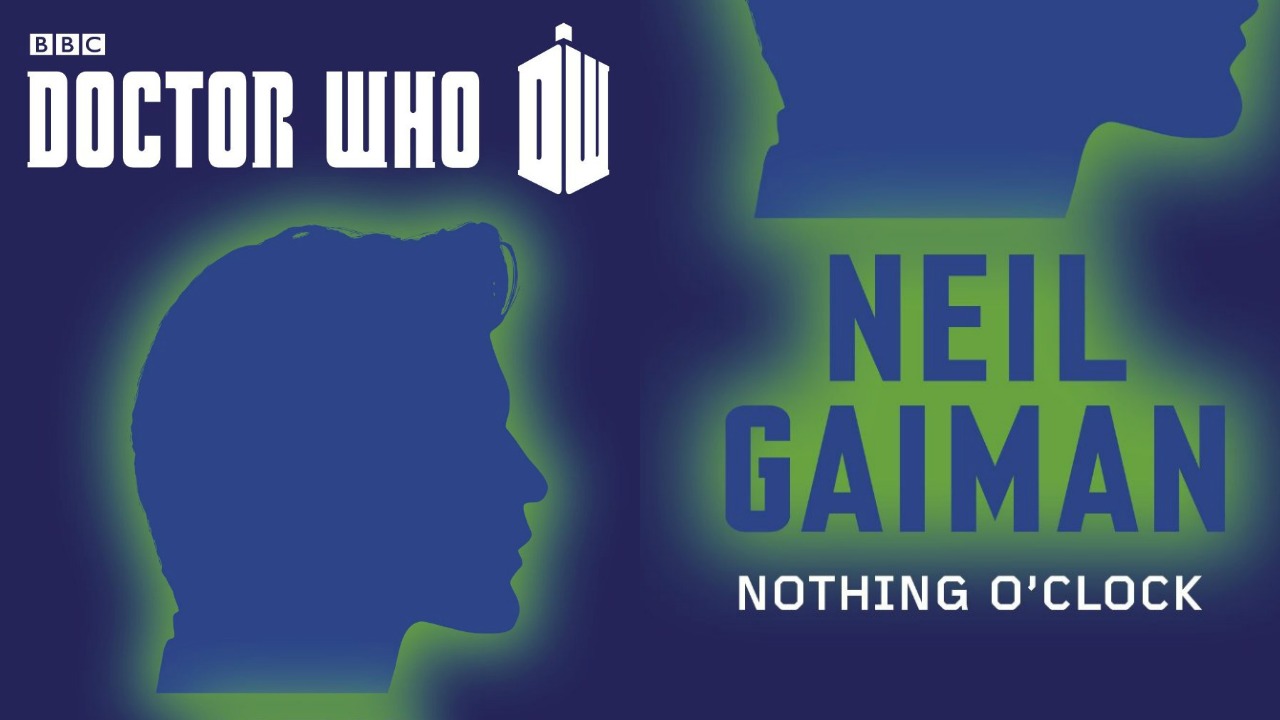
    Nothing O’Clock by Neil Gaiman

    My rating: 5 of 5 stars

    Every tv or film series that is even moderately successful ends up having spin-off novels of varying quality. This is particularly true in the sci-fi genre. Doctor Who is somewhat more than moderately successful, so there are quite a lot of them. Because spin-off works in general have a reputation as being quickly produced extensions of the shows they represent, I’ve generally avoided them. But there are certainly stand out exceptions that make you sometimes rethink your preconception (and hopefully adjust your personal level of snobbery). Nothing O’Clock is most certainly one of these.

    As part of the celebrations for the 50th anniversary of Doctor Who last year, Puffin released 11 short stories in e-book format; one for each Doctor and written by different children’s authors. (A twelfth story for the new Doctor will be released in November 2014. No word on whether the War Doctor will get one…)

    For the eleventh story, they tapped Neil Gaiman, a phenomenal (and phenomenally successful) writer who has some experience both in the genre and in the series. Gaiman penned two episodes of the series in recent years during Matt Smith’s run as the Eleventh Doctor, and so he is very familiar with that iteration character and that of companion Amy Pond. In fact, it’s all too easy to imagine this story playing out on screen. In the audiobook version, which is how I partook of the story, this is aided in no small way by narrator Peter Kenny.

    The story is a nice combination of familiarity and freshness. It feels like just another in a long line of adventures for these well-known characters, but everything else about the tale is brand new and very typically Gaiman.

    The author introduces a new enemy, the Kin, an alien race determined to take over the Earth. (This is not a spoiler.) They are creepy as anything Gaiman has come up with before, and that’s not faint praise. The author has a real knack for spooky.

    The dialogue and characterization of the Doctor & Amy Pond is so good that I found myself googling a few lines to see if they had already been on the show – that’s how authentic Nothing O’Clock feels. This story would make an excellent episode, and so the length of the story feels exactly right.

    My only possible criticism of the story would be that it has probably unfairly raised my expectations for other Doctor Who stories. I’ll take that…

    [schema type=”book” url=”http://www.neilgaiman.com/” name=”Nothing O’Clock” description=”Thousands of years ago, Time Lords built a Prison for the Kin. They made it utterly impregnable and unreachable. As long as Time Lords existed, the Kin would be trapped forever and the universe would be safe. They had planned for everything… everything, that is, other than the Time War and the fall of Gallifrey. Now the Kin are free again and there’s only one Time Lord left in the universe who can stop them!” author=”Neil Gaiman” publisher=”Puffin” pubdate=”2013-11-21″ ebook=”yes” ]