Ever hear Eddie Murphy’s bit on Elvis being allowed to do movies even though he couldn’t act, “We’ll let him sing all his dialogue”? Yep…
What’s more:
Ah, to be a young Elvis Presley; so completely on top of the world that they let you star in movie after movie, no matter how ridiculous. The thing about Elvis movies is that even you know exactly what you’re going to get, they’re still funny.
The story behind this one, if you care, places the King as a race car driver with the completely realistic name of Lucky Jackson who goes to Sin City for their first Grand Prix. He has a friendly rivalry in racing and in love with Count Elmo Mancini (seriously), played by Cesare Danova as they both pursue Ann-Margret’s hot pants. There’s also something about needing to raise money for an engine and, ahh, who cares…
I don’t think there’s 20 minutes of dialogue in the entire movie. And I’m probably over-estimating at that…The film does feature some hysterically fun footage of the stars participating in a number of fun outdoor sports and activities in front of projection screens.
Ann-Margret, 23 at the time was in only her 4th film, right after Bye Bye Birdie, and not only does her character have a name, Rusty Martin, she’s actually a good character for the first 20 minutes of the movie. After that she’s completely de-clawed and stands around waiting for Elvis.
The single most important feature of any Elvis movie, of course, is the music. Despite the world class title track, one of his best ever, the music is merely passable. Interestingly, the song Viva Las Vegas was released as a b-side – the a-side was the Ray Charles cover “What’d I Say”.
There’s an awful lot of dancing, taking advantage of the abilities of Ann-Margret. She’s more than a match for the King, being thought of as the “female Elvis”, and this was the last time that a co-star was allowed to upstage him. Colonel Tom Parker was furious how much time was spent filming her and the dance numbers, driving the costs over budget. Too bad, Colonel; she’s the only interesting thing happening here, even if she has an unfortunate tendency to yell out “ha” an unusual amount of times while dancing. Elvis’ dancing to the title track is downright frightening. Seriously, it’s disturbing to watch.
As far as the “story”, the less said the better. It’s your standard 60’s teeny-bopper fare. It’s distressing how quickly Rusty (remember, she’s the girl – told you she had a name) goes from a semi-strong character to a complete dimbo, being dismissed by her own father as getting in the way of the manly racing work.
Equally unbelievable is how quickly the picture wraps up. The race seems to be over merely minutes after it has started. There is so little racing footage. You look down at your popcorn for a minute, look back up and realize that his rival is out of the picture with a flat tire, Lucky has won the race and is now married to Rusty. It takes seemingly two minutes for all of the above to happen. The tour bus must have been leaving…
Viva Las Vegas is regarded as one of Elvis’ better pictures, which says a lot more about Elvis movies than it does about this film. It’s perfectly fine, I suppose, but reflect for a moment that this film came out the same year as A Hard Day’s Night, which it beat at the box office, and you can understand why I give it less leash.
Race car driver Lucky Jackson goes to Las Vegas to earn money to pay for a new engine for his motor car. Working as a waiter, he still finds the time to court young Rusty Martin.
Poster
Runtime
85
Tagline
Elvis is at the wheel but Ann-Margret drives him wild!
I really thought Gremlins 2 was a better movie than the original. I believed it for years. Then I re-watched them now back to back. Oops…
Spoiler-free Movie Review of Gremlins 2: The New Batch:
Gremlins 2: The New Batch is almost certainly the most unusual, atypical sequel ever made. It’s quite divisive for the same reason. It’s really interesting; there must be an equal percentage of people who liked and hated it, but it would be very hard to predict what percentage of each of those groups would count themselves fans of the original film.
My informal straw poll of acquaintances over the years finds that most people never even saw it. I suppose that isn’t very surprising. I didn’t see it in the theater, myself. The sequel came out in 1990, six years after the first film. That’s a little too long for a sequel for this type of movie. The film landscape had changed quite a bit in that time. There was no way this tale of a cute puppet that turns into monstrous puppets was going to have the same impact second time around.
Director Joe Dante really didn’t want to make a sequel, and the movie languished in development hell until he was persuaded to return with complete creative control. But a lot of time had passed; Chris Columbus, who came up with the original story, was now an accomplished screenwriter and director and about to hit it out of the park with the film Home Alone. Special effects wizard Chris Walas had also moved on to a directing career (if less successfully), and so the look of the Gremlins and therefore the film was going to have to change.
With the extra leash Dante had earned, he set out to make a film that would effectively skewer the very concept of sequels. Dante made a film like someone who has been talked into something and either a) wants to get fired, or b) knows he never will be fired and can therefore do whatever he wants. Gremlins 2 is a subversive cartoon of a movie.
The film was written by Charlie Haas, who is a fairly interesting choice based on his previous credits. My exhaustive research (i.e.; looking it up on imdb) shows him as the screenwriter of a pair of early Matt Dillon movies, Over the Edge & Tex, and some TV movies. I wonder what it was that caused the producers to hire him. Whatever it was, I’m grateful, because this is a great script, as is his follow-up, the wonderful Matinee.
FX legend Rick Baker came aboard to take on the thankless task of updating someone else’s work. He was likely persuaded by Dante & Haas’ vision of many more varied Gremlins. This produced mixed results.
It’s a crazy movie. It even starts off very unusually, with a Looney Tunes intro. Warner Bros was celebrating the 50th birthday of Bugs Bunny at the time and shoehorned this whole animated bit into the film. The plus side is that it reunited animation legend Chuck Jones with the characters that had made him so famous. The down side, of course, is that it makes absolutely no sense whatsoever to have the cartoon lead-in. It was initially a few minutes long, but when studio execs found it confusing (which it was), they cut it back to a very brief intro (which did nothing to make its inclusion less confusing). This may seem to be an odd point to focus on, but it really is a bizarre decision. I think the concept was to let the audience know that the movie they were about to watch would have a cartoonish zaniness to it – it didn’t. It made you wonder what the hell was going on and gave you the impression that what you were actually in for was total madness. Hmm, actually, maybe it did work…
Because that tone is prevalent throughout the film, and this is really where the dividing line sits. If you thought the first movie was too dark, you were in for a treat. If you thought the first movie wasn’t dark enough, you were in for a long night.
Gremlins 2 as a sequel has the unique distinction of being criticized both for being too derivative, and too dissimilar. Sort of depends on what you thought about the first film.
The setup is nearly exactly the same, but the delivery is completely different.
Billy & Katie have left their hometown of Kingston Falls for the big city, where they both work in a futuristic automated tower, the province of billionaire media mogul Daniel Clamp (perfectly played by John Glover). Through an unlikely chain of occurrences, Gizmo ends up in the tower and briefly back in the custody of Billy. Of course Gizmo gets wet, spawns a bunch of mischievous Mogwai who will manage to turn into Gremlins nearly before the first act is complete.
Here’s where it gets a bit different. The whole picture takes place in one main location – the office building. The choice of single location is inspired; aside from the interesting things you can do with monsters in a tower, it provides a setting from which to completely satirize 1980’s society. And this is where you begin to realize that we’re in for more of a comedy farce.
They make the unusual decision to distinguish the Mogwai, leading to some of the all-time worst character designs Rick Baker has ever been responsible for. One has “crazy eyes”, which is always a sign of trouble; another seems to be channeling Edward G. Robinson of all people.
In order to keep things interesting, the Gremlins get into a genetic research lab (run by Christopher Lee because why not) where they can sample different formulas that will transform them into different Gremlin hybrids. Sort of interesting, but it also instantly takes the movie from scary to silly. I don’t think anything about this movie could ever be confused with the borderline horror feel of the original.
They even bring in John Astin (Gomez Addams) for a cameo and cast Robert Prosky as Grampa Fred, a Grampa Munster type character just to underline the camp horror aspect they’re going for.
For the most part, the humor is excellent, particularly the automated messages from the building itself or the building staff picking apart the ridiculousness of the 3 rules for the Mogwai. It’s good satire, but the whole movie is seriously dated as a result. All the topical 80’s references simply don’t play anywhere near as well now. In the first film, Gizmo marvels as Clark Gable as a race car driver and recreates the role later in the film as he’s becoming the hero. I didn’t need to explain to my daughter who Clark Gable was – it was an archetype, not an in-joke. But when Gizmo goes Rambo in the sequel, I did have to pause the movie to explain the whole Rambo thing. And don’t get me started on the Hulk Hogan cameo…
Once the movie settles into the endless scenes of Gremlin shenanigans, the style moves directly into cartoon territory and never looks back. This is the stuff you came to see. The original also basked in the insanity of the Gremlins misbehaving and taking over the town. Interestingly, when you think about it, while the Gremlins do a lot of damage, they appear to do little real harm. Only the school teacher and the nasty realtor buy it in the first film. After that, all the humans make miraculous recoveries. (A big change from the first script, which had the creatures going to McDonalds to eat people.) It’s even more toothless here. I’m not sure anyone actually conclusively dies in the whole movie.
The movie also suffers from a sequel trend found in many films but nowhere so much as in the 1980’s: what I’m going to call character creep. You have a bit part in a movie, it’s funny, people like it. (Judge Reinhold in Beverly Hills Cop, Rick Moranis in Ghostbusters, Dick Miller as Murray Futterman in Gremlins) They make a sequel and think “Let’s bring them back but now they’re one of the stars! Everyone wants more of them!” No, we don’t. Not at all. It worked because it was an aside, a little extra color to the film. No one wants more sprinkles on their ice cream – a little bit is enough.
For years I told anyone who would listen that Gremlins 2 was a chaotic, funny, subversive and great movie and superior to the original. Now I’m not so sure. It really doesn’t age well in comparison to the original. The of-the-moment jokes really date it, and while the cartoonish craziness is still very funny all of the varied Gremlin characters cross the line into actual cartoons. Like the Looney Tunes characters that interject themselves into the closing credits, the zaniness goes too far and feels out of place.
[schema type=”movie” name=”Gremlins 2: The New Batch” description=”Billy Peltzer and Kate Beringer move to New York City and meet up with their Mogwai friend, Gizmo, when a series of accidents creates a new generation of diverse gremlins. Billy, Kate, and Gizmo must once again use all their experience to prevent another catastrophe.” director=”Joe Dante” actor_1=”Zach Galligan” ]
Scary/violent/grisly enough to help usher in the PG-13 rating, shows it’s age 30 years later, but still a great movie. Effects pretty good.
What’s more:
What an amazing time the 1980’s were. Gremlins was originally to be a Christmas release (hence the Christmas setting) but the studio moved up the date to 6/8/1983 to directly compete with Ghostbusters, released on the same day. Can you imagine anyone doing that now? Studios flee from competition and avoid other tentpole release dates.
Writer Chris Columbus came up with this highly original story after being creeped out at night by the noise of animals running around in his loft apartment. He actually wrote it on spec, just as a resume of sorts. It obviously launched his career – big time.
It’s a seriously dark story. This movie could have been much more a straight-up horror film. While producer Steven Spielberg, who instantly saw the value in this property, sometimes cheapens serious subject matter with his amusement park ride approach, it seems to have been necessary here. If he didn’t lighten this thing up and drive down the body count, we wouldn’t be talking about it today, or probably even 30 years ago.
As it is, it’s really grisly, violent, scary and mean. The kitchen scene alone was probably enough to force the creation of the PG-13 rating, and frankly, this thing might still have been flirting with an R. I’m not sure this movie is any less brutal or graphic than Alien, when you think about it. If you haven’t seen it in a while, I’m sure you’ll be surprised just how intense Gremlins is. And that’s after they decided not to decapitate the mom, eat the dog and turn Gizmo into a gremlin. Can you imagine?
Joe Dante directed the film. He’s an old-style director of the type that Spielberg seems to like. By that I mean very good at focusing on the important “must-have” shots and story beats, but sort of sloppy and unconcerned with details. There are a ton of continuity errors and characters that are introduced and then completely disappear from the film. The rough cut of this movie was well over 2 1/2 hours. They lost about an hour of film for release. That’s quite a haircut. Reportedly the producers considered giving this to Tim Burton for his directorial feature debut. I would have very much liked to see that. But Dante certainly does a good job.
Placing the story in a Rockwell-esque setting was a great idea and helps the story not seem so dated. Except for the fact that it’s so obviously backlot. It’s a little hard to not notice that you’re in Hill Valley waiting for Marty McFly to show up in a DeLorean.
The film also, frankly, looks terrible. It’s a really ugly picture. It certainly needs to be cleaned up, but I’m not really sure how much that would help. Dante and his DP John Hora are used to making dark, horror pictures and I suspect this was the look they were going for. I’m sure they needed to go quite dark to hide some of the puppetry and other effects, but the dated film stock itself is just really flat and bland.
While this isn’t really a horror movie, it would be hard to explain why or come up with another genre for it. The effects are pretty good, but the character design is fantastic. It’s a great, original story with some welcome appearances by long-time character actors. Gremlins really grabbed attention in 1984, and it had to do so in the face of some other really good movies. The movie is constantly rumored to be in the process of a reboot, and it’s easy to see why. It’s far from perfect, but it is an excellent, thrilling movie.
Fascinating as an achievement in guerrilla filmmaking and for absolutely no other reason. Stunned that this saw release, for many reasons…
What’s more:
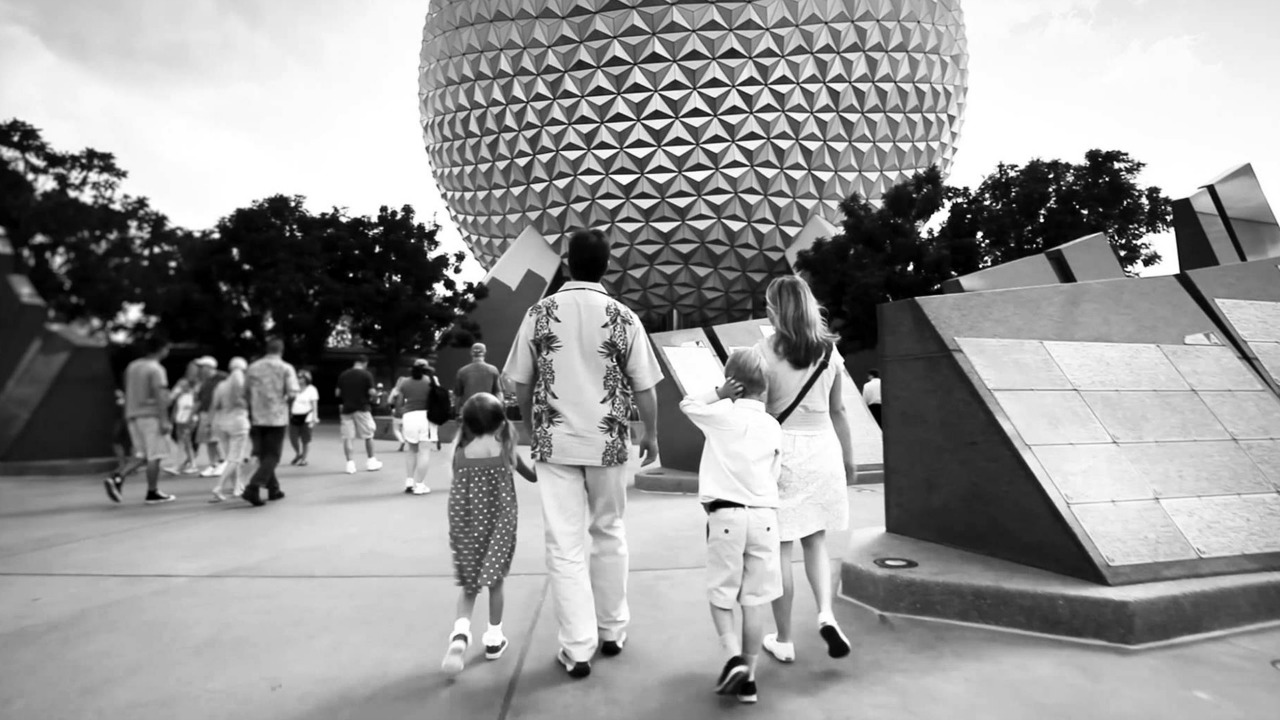
You’ve possibly heard about this movie: fantasy/horror/mind trip movie filmed without permission at Walt Disney World & Disneyland. The concept is so startling that it earned a viewing from me, despite having no particular interest in the genre or story (such as exists).
It truly is remarkable what debut writer/director Randy Moore is able to accomplish here. The idea of pulling this off defies belief. How can you make a feature-length film in one of the most closely monitored and managed places in the world and have them not know you’re doing it?
Such is the state of digital filmmaking that they pulled it off. For starters, the cameras they used (two Canon EOS 5D Mark IIs & one Canon EOS 1D Mark IV) look just like consumer grade touristy cameras, if a slightly better class. Which is pretty much what they are – they are simply capable of shooting HD video. They shot in black & white to compensate for the lack of control they had over lighting and the environment. They were completely at the mercy of ambient light and sunlight. Simply incredible.
And as a technical accomplishment, it is extremely impressive. Far from detracting from the story, the lack of color hugely enhances the artistic vision. Sights that are usually vivid and beautiful gain an eerie, unfamiliar quality, which is of course exactly what they were going for. Escape From Tomorrow is a visual triumph borne out of the least likely to succeed production. This really shouldn’t have worked. But it does…
The other thing that makes my watching the movie so unlikely is that it ever saw the light of day. I simply cannot get over the fact that Disney didn’t try to kill this thing. I get that these sort of laws are hardly black and white, but I don’t accept the fact that they couldn’t have buried it. Even if you want to go with the fair use argument, I think you can certainly make a case that use of their trademarked characters and rides in this film is done so in a detrimental manner and is damaging. Even if you have a serious 1st Amendment supporter for a judge, it would be pretty hard to get past the fact that filming in this manner clearly violates the rules of the parks, and far more importantly that you have now violated the privacy of hundreds of people (including minors) who have signed no release for their likeness to appear in this movie.
I’m sure they looked long and hard at legal action, but in the end appear to have accepted some very wise counsel to just ignore the damn thing and not give it any more attention than it can garner on its own.
So, after you get past the novelty of the production, how much attention does it deserve on its own? Not much. I really kind of hated it as a movie. It was downright unpleasant to watch. The film seems to be a classic case of trying so hard to do something that you never stop to wonder if you should. The setting and the disbelief of how it was made are fascinating, but that’s the only thing that is.
The story itself is a joyless and confusing mess. After 90 minutes I still wasn’t really sure what genre the picture was or what the whole point was. I think I get what they were going for – a surreal thriller showing that strange things can happen anywhere, and are possibly more likely to occur in an unnaturally happy place. But, man, it takes a long time to get there and it’s hugely disjointed. There’s no flow to it, it’s boring, and the tone shifts radically scene to scene. I can only imagine that the unusual nature of the production significantly handcuffed their ability to get all the footage they needed and this is a case of not having enough good to edit into a cohesive story. But maybe not. Perhaps this was exactly what Moore was going for, in which case I’ll just chalk this up to me not being the right audience for this David Lynch-ian type thriller. (But honestly, it wasn’t thrilling. I don’t know how to classify it. It felt like horror, but it really wasn’t. It’s certainly creepy, but more in a Naked Lunch kind of way. But it wasn’t the creepiness that made it distasteful, it was the creeps. The people in this movie are all so awful to each other that you can barely stand to watch. I’m not concerned that there are supernatural and dark forces happening at Disney World; I’m concerned that there are total jerks behaving badly and upsetting children.)
This film raises all kinds of possibilities of how guerrilla filmmaking may become a serious force, legal/privacy issues, technical considerations and many other conversation starters. But a discussion about future of covert filming would have been more entertaining.
In a world of fake castles and anthropomorphic rodents, an epic battle begins when an unemployed father’s sanity is challenged by a chance encounter with two underage girls on holiday.
Hey fanboys, it’s a Disney movie based on a princess story. It’s not for you. Shouldn’t you be getting ready to savage TMNT or Transformers?
What’s more:
Maleficent is a live-action film closely based on a cherished Disney animated classic, Sleeping Beauty. (Which of course was based on established classic works; La Belle au bois dormant by Charles Perrault and Little Briar Rose by The Brothers Grimm.) Disney has fistfuls of animated movies that they based on classic tales, and you should expect to see nearly every one of them made into a live action film over the next 10-20 years. After the monster success of the live-action reimagining of Alice in Wonderland, Disney became bullish on these and it’s easy to see why. They can essentially recreate their early days as a studio, updating classic tales one at a time, only with actors instead of pencils this time.
After Alice, Disney next took on The Wizard of Oz with their 2013 film, Oz the Great and Powerful. Alice and Oz shared the same production designer, special effects professional Robert Stromberg (also designed Avatar), who is given the reins for Maleficent as his directorial debut. Yes, Disney hired a first-time director for a 200 million dollar film. Think they don’t know how important the look of these movies is?
Written by Linda Woolverton, who with her last picture (Alice in Wonderland – seeing a trend here?) became the first female to be sole screenwriter to a one billion dollar movie. She also wrote Beauty and the Beast, co-wrote The Lion King and brought both to Broadway.
All of this is a very long introduction to illustrate a very simple point: these are movies for kids. They are meant to be the new generation of Disney classics. While they borrow heavily from modern CG films which seem to have some requirement for massive battle scenes – de rigeur since Lord of the Rings – they are essentially modern updates of the characters that made Disneyland, so if the fanboys aren’t happy, who cares…
Maleficent is a good movie. I quite enjoyed it, but much more importantly, my daughter loved it. It simply cannot be overstated how important it is to have strong female roles, particularly at this time in history, when misogyny seems rampant. If this movie draws comparisons to Frozen, Disney’s last big hit, well that’s a good thing. Sure, the praise for that film may have been over the top in comparison to its actual merit, but that’s a perfectly natural response to such a dearth of meaningful film portrayals of female relationships. (I’d argue that this film shares more in common with the musical Wicked.) If Maleficent now makes you nervous that pro-female stories are gaining a foothold – GOOD. It’s about time there were movies that acknowledge the other half of the human race. If all this “girl power” is making you uncomfortable, I’m sure you can find something in the 700 other movies geared to men that are being released this season. Maybe try that one with the dinosaur robots – I’d hate it if they spent that much money to make a crappy Mark Wahlberg movie and no one showed up…
So does this mini-rant mean that Maleficent is the feminist movie of the season? Don’t be silly. It’s a kids movie; a modern telling of a very old story. And it’s a good one.
You know the story of Sleeping Beauty or you wouldn’t have come this far. While I haven’t seen that movie in a while, I saw it more than enough during my daughter’s princess years and recall it as a surprisingly meaty movie. It was the one that really stuck with you as a kid, and that’s entirely because of the villain. She was mean, nasty and turned into a dragon – one of the greatest screen dragons of all time, mind you.
The look of this character is so important. Marc Davis (one of Disney’s Nine Old Men) was the animator credited with developing the look of Maleficent in the original Disney film and he is actually acknowledged in the end credits of Maleficent – a nice gesture.
For the live-action film, they’ve taken this character and run with it. Maestro Rick Baker applied his makeup wizardry to transform Jolie into a horned, angular vision that is enchanting. The amazing costumes were designed by Anna B. Sheppard, who you would have to consider a mortal lock for an Academy Award here.
Angelina Jolie is masterful here. She really embodies the character so fully that it’s hard to remember another role she so completely filled. You quite simply could not have made this picture with anyone else. This is a King & I/Yul Brynner moment.
The movie really belongs to the main character. That’s good. The other characters are probably a bit under-written as a result, though. Elle Fanning is wonderful as Aurora, even if not given a lot to do. They make an interesting choice in never calling her Briar Rose. The two women have some very nice scenes together, but nothing is as funny or charming as Maleficent interacting with the younger versions of Aurora – great stuff.
King Stefan (Sharlto Copley) is a total tool whom you can’t wait to see less of (the character, not the actor). He has a queen, presumably, but blink and you’ ll miss her. English actor Sam Riley gets a nice role as the shape-shifting Diaval. I actually think the sometime-crow gets the most screen time of anyone besides Maleficent herself.
Visually, I’d have to say it is a success. Not a triumph, because I’m still not totally at home with these overly digital creations. There’s a sameness to them that’s cheapening modern films. If you took stills of the individual creatures that inhabited this movie, Narnia, Wonderland, Oz or any of the other semi-recent CG movies and mixed them all up, I’m not sure you’d have any idea which film they came from. These things could be climbing a beanstalk, roaming Hogwarts, sailing the Caribbean or fighting in the arena and I don’t think you’d notice a difference.
The big exception is the “good” fairies. They’re terrible. Motion capture of the worst variety. The closer we get to digital actors the more the little differences matter (I’m sure that’s a quote or a maxim; if not, it is now). Their heads are too big and the dead eyes are really unnerving. I stopped just short of closing my eyes every time they were onscreen.
Maleficent is a good picture. It’s a good summer movie, it’s a good kids movie, and it’s fun for anyone who lets it be so. It’s not a new classic, but lots of kids will think it is, and that’s fine.


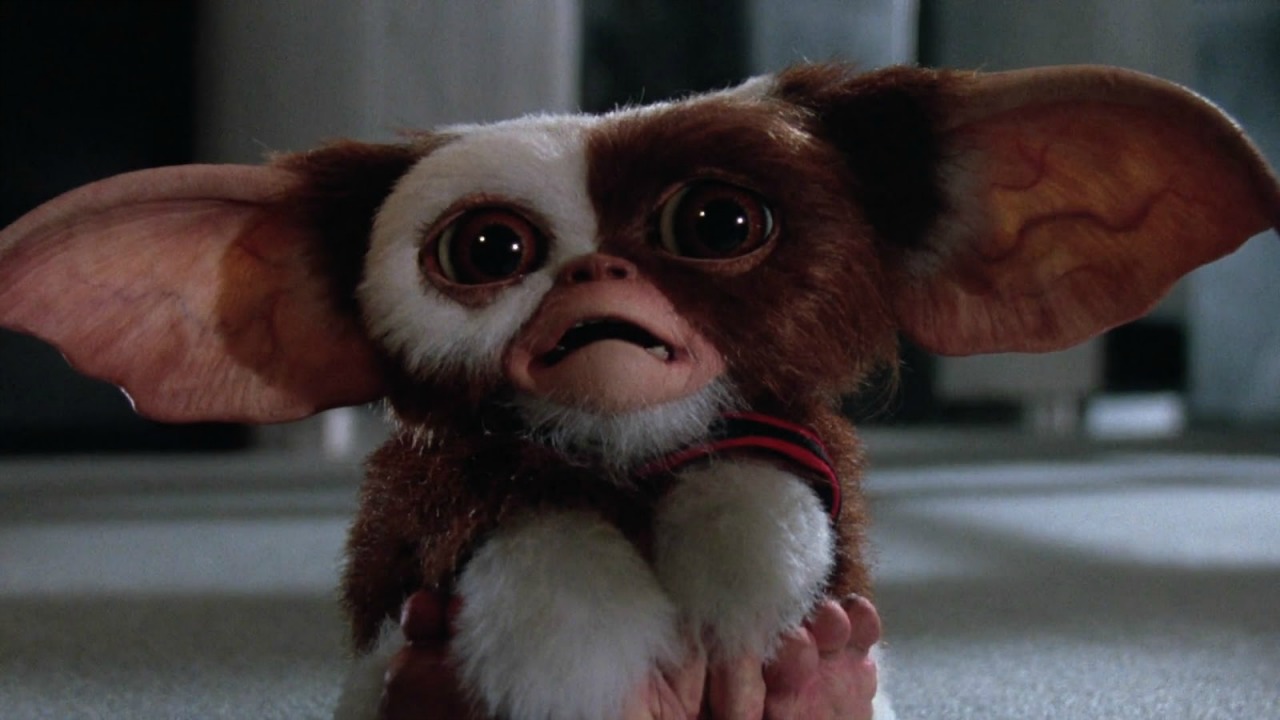


 Once the movie settles into the endless scenes of Gremlin shenanigans, the style moves directly into cartoon territory and never looks back. This is the stuff you came to see. The original also basked in the insanity of the Gremlins misbehaving and taking over the town. Interestingly, when you think about it, while the Gremlins do a lot of damage, they appear to do little real harm. Only the school teacher and the nasty realtor buy it in the first film. After that, all the humans make miraculous recoveries. (A big change from the first script, which had the creatures going to McDonalds to eat people.) It’s even more toothless here. I’m not sure anyone actually conclusively dies in the whole movie.