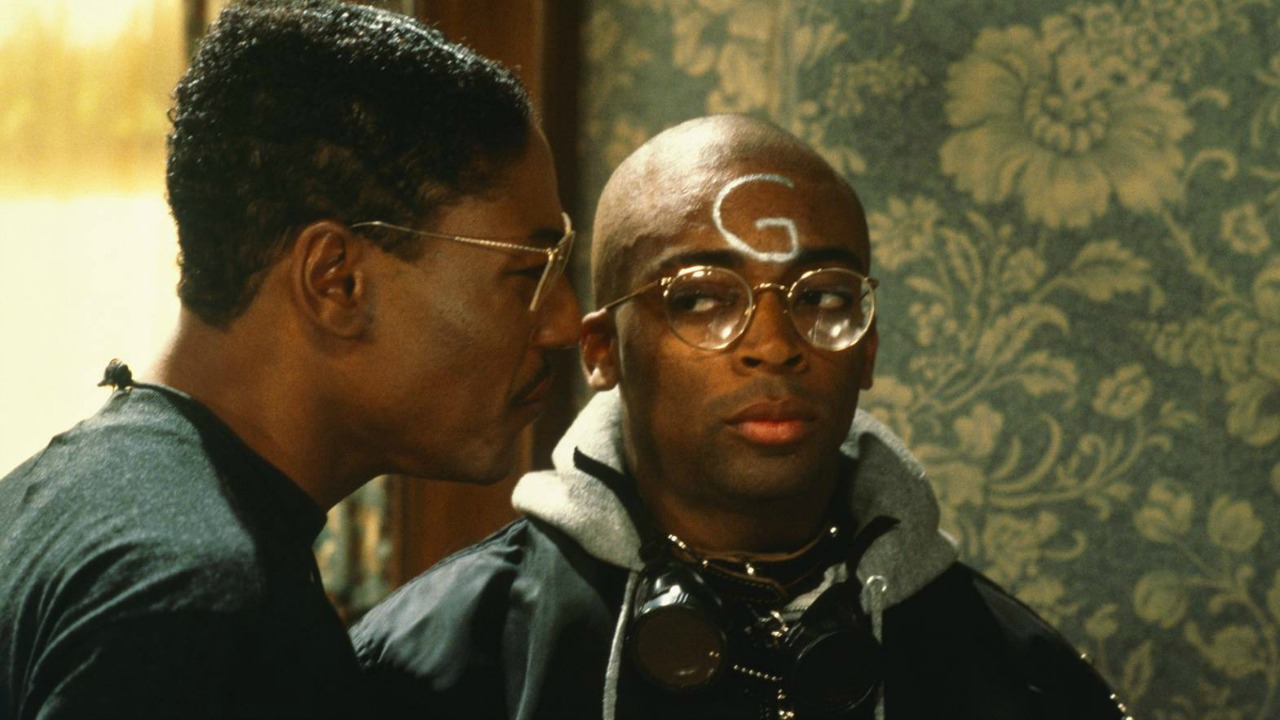
Wow, that escalated quickly. By his 2nd film, Spike has completely arrived. Totally unique, polished filmmaking with surprising musicality.
Spoiler-free Movie Review of School Daze:
School Daze is fairly straightforward, dare I say traditional, filmmaking from Spike Lee. The narrative is completely direct and the structure and archetypes are completely familiar. If you’ve seen a college movie like Animal House or Revenge of the Nerds, you will be at once at home in the setting.
That doesn’t mean School Daze is not a unique film, of course. Lee takes the familiar setting and provides an insight into an experience and perspective that is unfamiliar to many. That’s what great filmmakers and storytellers do; they take a classic tale and put their own stamp upon it. While it is interesting as a white male to see more of the complexities of the disagreements between young African Americans at the fictional Mission College, it is a larger achievement to see the similarities. The same would be true if this film was showing what it is like to be at a music school or an all-Jewish school or a commuter school in the Australian outback. It’s fascinating to see the different issues unique to this group of individuals, it’s what gives a story its color, but ultimately, the more important point is our similarities, not our differences.
Actually, while I didn’t attend a historically black school like Lee’s alma mater Morehouse, the real reason School Daze is such a different experience to mine is that I went to an urban state school with a large commuter base. We were never really isolated on a campus or filled with some central school spirit. While the entire premise of the film is how divided the campus is, everyone seems involved in everything. During the football scene, everyone at the school is there and invested in the game. I didn’t go to a college like that.
The football scene is also clever in that they never once show the game, just the reactions of the fans. That’s old-school…
The picture centers mostly around Larry (not yet going by Laurence) Fishburne as Vaughn “Dap” Dunlap, a senior student obsessed with getting the school administration to divest from South Africa in the days of apartheid. He has the conditional support of his friends and girlfriend, Rachel (Kyme), but they also want to concentrate on their studies and enjoying the college experience.
Dap & Rachel’s antagonists are members of the Gamma Phi Gamma fraternity and female counterpart the Gamma Rays, led by Julian (Giancarlo Esposito) and Jane (Tisha Campbell), respectively. Straddling the divide is Dap’s cousin “Half-Pint” who is pledging Gamma.
The main divide, though, is the conflict in the African-American community over self identity. Questions of hair styles, skin tone, appropriation of racial slurs – these issues are at the heart of self-image and identity, issues that are hugely important at any time of life, but integral to those of college age young people.
Nowhere is this handled more impressively than in a show-stopping musical number “Straight and Nappy” (written by Bill Lee). The entire picture is musical, but handling complicated issues like self-discrimination in the form of a Busby Berkeley style musical number is absolutely sublime. The musical numbers are great; unorthodox in the subject matter, but completely traditional in most other ways. Spike is an admitted admirer of the Golden Age of Hollywood musicals, so the fact that School Daze plays it mostly straight really shouldn’t be all that surprising.
School Daze is a fantastic picture. Anchored by great musical performances (except that dreadful dance tune “The Butt”; what the hell was that about?) and great acting, the whole film buzzes with the energy of a young visionary with something to say. The ending is unsatisfying, but I bet I would have loved it when I was an angry and passionate young man. Recommended.
[schema type=”movie” url=”https://www.40acres.com/” name=”School Daze” description=”A not so popular young man wants to pledge to a popular fraternity at his historically black college.” director=”Spike Lee” producer=”Spike Lee” actor_1=”Laurence Fishburne” ]
It’s been 30 years, but it took only 12 days & 175K for Spike to usher in the age of independent cinema. Edgy glimpse of what was to come…
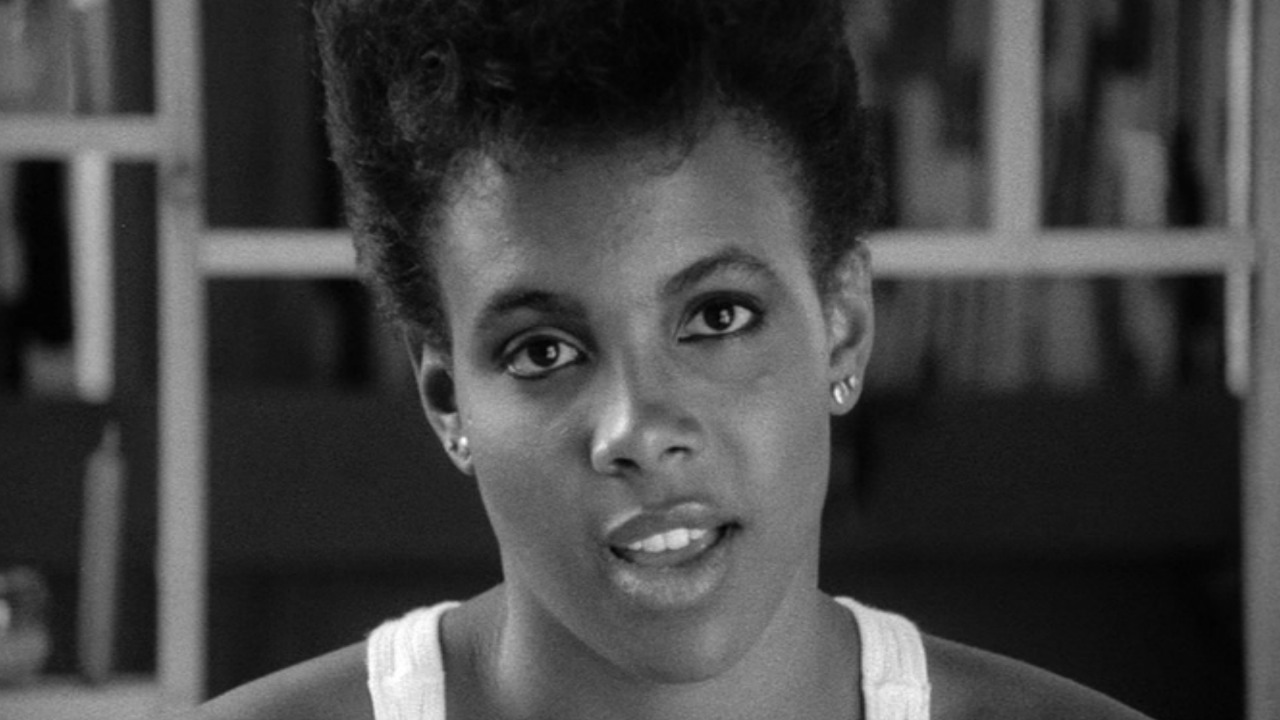
Spoiler-free Movie Review of She’s Gotta Have It:
Shot as quickly as possible, with no money for retakes, much less reshoots, She’s Gotta Have It is one of the first truly successful independent movies of the 1980’s, paving the way for the entire indie cinema boom.
Spike Lee would soon become a household name, though recognition by the establishment would continue to elude him. (In 2015 he was finally given an honorary Academy Award, in no way making up for a career of Oscar snubs.)
From the very start, you can already see traces of the filmmaker Lee would become. The rhythm, the unique camera angles, the jump cut editing, the interposed still shots, the musical focus, the cutting dialogue – all of these are on display in She’s Gotta Have It.
The film stars a wonderfully unique film character: the self-assured, independent woman. Spike’s films haven’t always done right by women, which is puzzling as he has simultaneously written some particularly fine female characters. The lead of She’s Gotta Have It is a little of both.
Nola Darling (Tracy Camilla Johns) is a captivating and strong young woman, who doesn’t seek or require the approval or support of man nor woman. She has a career, a gorgeous loft apartment, a secure self-image and a healthy sexual appetite. Not content with one lover, she maintains relationships with three men, all of whom she views as friends – not understanding why they feel like rivals.
The acting is great, particularly when you consider it is all performed in one take, since there wasn’t money to do more. The very existence of the film is an impressive achievement. (The film is a total family affair, with music by father Bill Lee and acting from sister Joie Lee.) Johns is perfectly cast, a true original voice for an original character. The supporting cast of her suitors is solid if filling archetypal roles. All of the roles are a bit underwritten, come to that.
The film takes on the broad structure of a documentary, with each character participating in on-screen interviews, interspersed with long scenes of traditional storytelling. The format works pretty well, even if it does suggest that this story is being taken a little more seriously than is strictly necessary.
The tagline for She’s Gotta Have It was “A seriously sexy comedy”. It’s that last word that doesn’t totally fit. There are funny moments in the film, to be sure, but I’d never classify it as a comedy. I suppose it sounds pompous to call it a drama, but really that’s what it is. In fact, the only real problem with the picture is a tone-deaf scene of violence at the end of the second act. It’s totally out of place and an acknowledged wrong step by Lee.
Even thought the film is a trim 88 minutes, it still feels a bit overlong. Many of the story beats are repetitive. It’s a minor complaint, though. The story provides a unique perspective on relationships, gender roles, societal views and a first look at some of the conflicts between African-Americans that would be explored so well in his subsequent pictures.
She’s Gotta Have It is a fine debut film. Like the visionary auteur at the helm, the film is a true original.
[schema type=”movie” url=”www.40acres.com” name=”She’s Gotta Have It” description=”Nola Darling (Tracy Camilla Johns) is a young, attractive, sexually independent Brooklynite who juggles three suitors: the polite and well-meaning Jamie Overstreet (Tommy Redmond Hicks); the self-obsessed model Greer Childs (John Canada Terrell); and the immature, motor-mouthed Mars Blackmon (Spike Lee). Nola is attracted to the best in each of them, but refuses to commit to any of them, cherishing her personal freedom instead, while each man wants her for himself.” director=”Spike Lee” producer=”Spike Lee” actor_1=”Tracy Camilla Johns” ]
Yes, you’ve seen and read stories like this before. It isn’t unique. But there’s something to be said for doing something well, nay perfect.
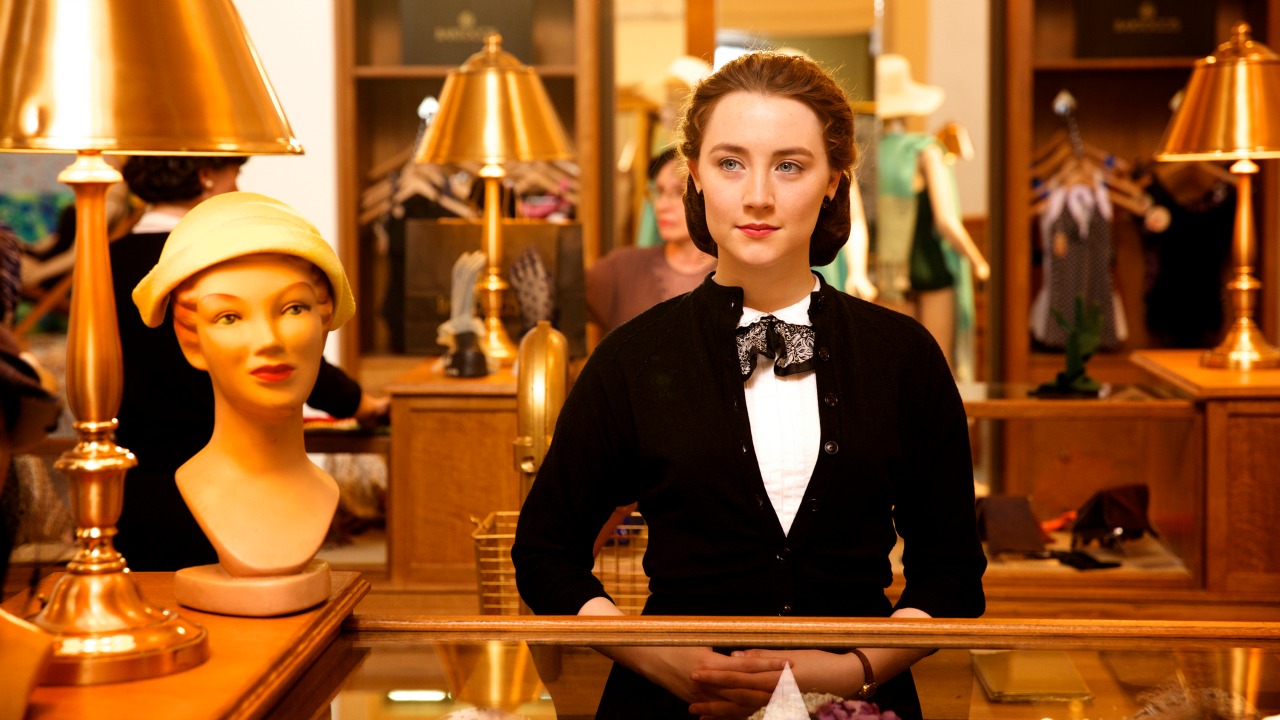
Spoiler-free Movie Review of Brooklyn:
Brooklyn is a stunningly beautiful, emotional, well-written and wonderfully acted film. I’d have to say it’s a nearly perfect film.
Now I know this sounds like I’m lining up the film for a big criticism – a big “but…” – but there really isn’t one. I don’t think I can find a single critical or negative thing to say about the picture. That’s not to say of course, that I consider it terribly original, ground-breaking or life-changing. It’s just good. Very good. It is pretty much perfect, really.
It is true that it’s not the sort of film I consider “big screen material”; that is to say, I don’t generally go out of my way to see quiet dramas in the theaters. Not that they are at all undeserving – far from it. But I sadly don’t get out to the cinema as much as I’d like and that, coupled with the short theatrical runs of pictures and the ridiculously small wait for home release, mean I usually reserve my movie-going experiences for big effects pictures that really fill a 40 foot screen.
As it turned out, my long-delayed trip to go see the new Bond film with a friend ended up with us missing the picture and so we found ourselves tucking into Brooklyn instead. While of course I’m upset I missed Spectre, I was delighted to have the opportunity to see director John Crowley’s brilliant film, and on the big-screen no less. It certainly deserved the 40 foot treatment…
The Oscar-nominated screenplay by Nick Hornby (yes, that Nick Hornby – he’s making quite an impressive splash in his second career of screenwriter) is an adaptation of Colm Tóibín’s popular novel. I haven’t read the book and frankly don’t plan to, for the story, while excellent, doesn’t really contain anything you haven’t read/seen before. The immigrant experience is fascinating and crucial to an appreciation of the United States, but it’s also quite personal. If you’ve seen one well-made telling of the immigrant experience, I’d suggest you’ve sort of seen them all. The details change and each story is worthy of hearing, but the stories are somewhat more or less meaningful to you in direct relation to how closely it echoes your American experience.
No, the difference maker is in the execution, and Brooklyn hits every note. It is marvelous to watch, truly gorgeous. Cinematography by Yves Bélanger is absolutely stunning. I can’t say he was robbed by not getting an Oscar nod, because the nominees are all amazing, but this work definitely is award material. He makes Brooklyn, New York and Enniscorthy, County Wexford equally beautiful. That’s rather impressive.
The visuals are made even more striking by the incredible attention to detail in this period piece. Production Design by François Séguin; Art Direction by Irene O’Brien & Robert Parle; Set Decoration by Suzanne Cloutier, Jenny Oman & Louise Tremblay; Costume Design by Odile Dicks-Mireaux… these are some of the unsung talents who make films shine…
Acting is seldom overlooked in a film, however, and Brooklyn features some impressive performances. Emory Cohen, Domhnall Gleeson, Fiona Glascott, Jim Broadbent, Julie Walters, and others have fine turns for their parts, but no one can compare to Saoirse Ronan. She completely owns the role of Eilis Lacey – it’s a once in a lifetime pairing of actor and part. Ronan is so incredibly expressive that you are drawn into her entire journey. After walking out of the theater I remarked that Ronan was a mortal lock for Best Actress. Truly captivating…
Brooklyn may not be the most original film up for Best Picture this year, but it is entirely deserving of the attention. It is a beautiful, moving, lovingly made film and a very easy recommendation.
[schema type=”movie” url=”http://www.sundance.org/projects/brooklyn” name=”Brooklyn” description=”Set on opposite sides of the Atlantic, John Crowley’s Brooklyn tells the profoundly moving story of Eilis Lacey, a young Irish immigrant navigating her way through 1950s Brooklyn. Lured by the promise of America, Eilis departs Ireland and the comfort of her mother’s home for the shores of New York City. The initial shackles of homesickness quickly diminish as a fresh romance sweeps Eilis into the intoxicating charm of love. But soon, her new vivacity is disrupted by her past, and Eilis must choose between two countries and the lives that exist within.
Based on Colm Toibin’s acclaimed novel, director Crowley and writer Nick Hornby craft a deeply effective, sweeping romance. The sumptuous filmmaking vividly depicts a rapidly progressing world. Surrounded by a stellar cast of supporting characters, Saoirse Ronan gives a captivating performance as the luminous Eilis. The heart of this highly accomplished work evokes a timeless portrait of leaving home and the excruciating decisions one must make.” director=”John Crowley” actor_1=”Saoirse Ronan” ]
An Irish immigrant lands in 1950s Brooklyn, where she quickly falls into a romance with a local. When her past catches up with her, however, she must choose between two countries and the lives that exist within.
Spike’s latest joint is his most important & timely ever; high praise indeed considering his previous work. #MostImportantAmericanFilmmaker
“I’m going to talk about a life today. An important life in our community. A life that ends life. The life of a gun.”
Spoiler-free Movie Review of Chi-Raq:
This most recent modern telling of Aristophanes’ Greek comedy Lysistrata does something none of the others have; put it in verse. Not strictly an opera or a play, the dialogue is spit out in rhyme. The whole thing is like a jazz piece or a poetry slam. Chi-Raq has a unique style that mostly works. At times it’s rhyme for the sake of rhyme – like a Muhammad Ali poem and just as awkward.
The film brings to mind nothing so much as the 2011 Lebanese film Where Do We Go Now?, a similarly mixed film. Perhaps there’s something about ambitious and weighty message movies that interferes with clear narratives. May need to evaluate these films on a different scale as they focus on message/change first, entertainment second. I wonder if Lee saw this film; there’s a scene early in Chi-Raq at a nightclub where the mostly female audience move in an elaborate choreographed dance, which hugely recalls the striking opening to Where Do We Go Now?. I’d like to think it’s a shout-out and not a coincidence.
Chi-Raq opens on a startling graphic image of the map of the United States made entirely of guns; Spike could have been a graphic designer – don’t think there has ever been a more visually oriented filmmaker, as odd as that may sound. Yes, all filmmakers are visual – it’s sort of a requirement of the art form – but Lee really possesses a skill for imagery and iconography that transcends film.
After the first of several performances of Nick Cannon’s “Pray 4 My City” and a proclamation that THIS IS AN EMERGENCY, the stage is set for the story with a series of sickening statistics illustrating the beyond disturbing fact that fewer Americans were killed in both the Afghanistan and Iraq wars than in Chicago during that same period of time…
“Guns have become part of America’s wardrobe.”
Samuel L. Jackson fills the role of the Greek Chorus in the character of Dolmedes, and guides us through the story of this updating of Lysistrata. Interestingly, screenwriters Lee and Kevin Willmott have largely retained the character names from the original satirical comedy.
Lysistrata (wonderfully played by Teyonah Parris), a parentless inhabitant of the South Side of Chicago doesn’t even know of a time without violence. Her boyfriend Demetrius (Nick Cannon), a rising rapper renamed Chi-Raq after the cynical portmanteau bestowed on the city, is a leader of the purple-clad Spartans “organization”. Along with their orange-wearing sworn enemies, the Trojans, led by Cyclops (Wesley Snipes), the gangs are locked in a never-ending conflict.
Constant gun violence is an accepted part of life for Lysistrata, but her cynical exterior is being worn down by the senseless tragedy, and after the death of yet another innocent, she’s willing to be advised by her wise neighbor, Miss Helen (Angela Bassett) that there may be a way for women to stop the violence…
“The question remains: ‘Can your plan save us from us?’”
It’s a mostly clever allegory, borrowing the concept of the sex strike for peace. At times it may be a bit too faithful to the original story, though. For example, in the original, Lysistrata’s army took over the Acropolis, whose treasury was vital to the war effort. It doesn’t totally follow for her film counterparts to seize a military base; leaving aside the fact that in modern life there isn’t a single site that is crucial for making war, the protagonists aren’t actually trying to stop war – they’re stamping out street violence.
Surprisingly, this mixed message actually provides for one of the film’s great powers; the juxtaposition of the macro and micro issues. The defining event in the film that acts as the agent of change is the accidental murder of a seven-year young girl caught in the crossfire of gang violence. That event strengthens the resolve of the protagonist and is the main (but not only) impetus for everything that follows. But, poignantly, young Patti’s murder is often overshadowed both in the community and the film.
John Cusack has a great performance as Father Mike Corridan, leader of the local church and his character in some ways is the whole movie writ small. He is a bit of an enigma as a white spiritual leader in a predominantly black community, and at first he comes off as a bit grandiose – a figure more interested in advancing a religious agenda than connecting with the victim’s mother. More preaching than reaching, to borrow the style of the narrative. His first scene immediately following the shooting in which he tries to comfort the mother that her child is in heaven feels hollow to me; but that’s the beauty of the picture – it’s supposed to – it feels hollow to her.
The funeral scene, one of the best in the picture, is even more illustrative. There’s a beautiful song and dance (“All Power” by Cinque Cullar) in an enormous, gorgeous church, filled with people. But the mother feels so alone. It all seems so empty, so inadequate. Father Mike gives a lively, angry, cutting, accurate sermon on the problems that plague the community and led to this situation. It’s all huge and demonstrative and needs to be said. But this poor, grieving young mother looks so small, so alone, so uncomforted.
“Cynics say, ‘Well, if I snitch, I’ll be killed too’. First of all, when a murderer walks free, we are all in danger. But if multiple folks come forward, multiple folks who witness these murders, there is no one target.”
Jennifer Hudson deserves an Oscar for her minor (in screen time) role as Patti’s mother, Irene. The visual of a grieving mother kneeling in the street trying to clean her slain daughter’s blood from the pavement is absolutely crushing. The over-the-top movie style and attention getting actions of the main characters dominate the tale, but when contrasted with the quiet scenes of this woman’s grief, the picture becomes something more.
I’ve watched a lot of Spike Lee’s movies and I’m still never sure whether this type of counterpoint is intentional or a happy accident. He’s a brilliant filmmaker and the undisputed master of polemical storytelling. But he’s as subtle as a pipe bomb and never seems to place any value on understatement. He’s too gifted and intelligent and has been making fantastic pictures for far too long to be “accidently” doing anything, much less juxtaposing loud and soft dynamics, but it really does seem that these quiet displays of emotion elude him. I don’t mean that they’re unintentional, but I keep wishing for him to develop these softer moments and build something from them; to feel more like a crucial piece of narrative and less like a breather.
Because the main problem with Chi-Raq is something of a recurring one for Lee; too many plates in the air. This isn’t a particularly rare problem for visionary artists, but what is unique in Spike’s case is that it’s not an editing problem. Many other brilliant artists have problems keeping a focused narrative and just need a good editor to rein them in and help refine the message. But Lee has worked with talented editors, not to mention that he is an extremely capable self-editor; he does have exhaustive history of working within the time constraints of advertisements and music videos, and his pictures all show his brilliant cutting instincts.
“We go from third-rate schools to first class high-tech prisons.”
No, I think these are issues that stem from the writing stage. Lee will go down in film history as one of the most visionary and important filmmakers, and the simple fact is that sometimes he just has more ideas than can fit in a single picture. It’s not really a deal-breaker, but his pictures often feel over-stuffed – less overlong than overbusy.
In Chi-Raq, there are too many characters and too many storylines. Sam Jack’s character Dolmedes doesn’t really simplify the story with his narration, because he goes on and on. There’s a whole segment with a confederate hearted Army Major (King Kong, unbelievably overplayed by David Patrick “Warriors…come out to play-ee-ay!!” Kelly) that is just downright bizarre, but more importantly takes up a good five minutes of screen-time right in the heart of the picture when the momentum needs to be building – instead the thing jumps a rail.
But it’s a good movie and production for all of that. One thing about writing about a Spike Lee joint is that you use the phrase “long-time collaborator” a lot. Enough that you should probably copy it to the clipboard. Many if not all filmmakers like to work with people with whom they have experience; it makes sense. But some build up a John Ford-like stable of recurring players, and chief among these may be Lee. While filmmakers need to be careful not to fall into a rut when using the same collaborators, as a fan/viewer, it’s kind of reassuring to see people return. Aside from the nice aspect of loyalty, it’s really interesting to see the work of a filmmaking team mature each time. It’s very much the age of the auteur director, and Spike is certainly a very powerful voice, but maybe that’s why it’s so fascinating that he’s not the only voice. I eagerly look for Terence Blanchard, former DP Malik Hassan Sayeed, current DP Matthew Libatique and others in the credits each time.
“What makes someone a target is not the shooter. What makes someone a target is the community that surrenders to fear…and becomes silent.”
All of Lee’s films are anchored by music; this is an artist who uses every tool at his disposal to tell his story. Even by those standards, Chi-Raq is a very musical piece. There’s a rhythm to every line, every scene. Even outside of the dialogue, the songs are so prominent, featuring synchronization and even occasional choreography. The lyrics to the opening number, “Pray 4 My City” by Nick Cannon are actually written out on a black screen for the first few minutes before the title, acting almost like an overture. With music that is so front and center, you could almost expect no actual score. Fortunately Lee has an excellent understanding of the need for contrast and once again taps long-time collaborator (see?) Terence Blanchard. From the first swells of the orchestra, Blanchard shows his mastery of quiet, strong themes that provide narrative import.
The acting in the film is solid, with Hudson and Parris the big standouts. As the heroine, Parris really does convey real character growth in a believable and authentic performance. That’s hard to do with so many bombastic scenes. Cannon doesn’t have much of an arc, but he has great stage presence. I expect to see more from him and Parris.
Angela Bassett turns in her usual strong performance, and as mentioned before, Cusack delivers. Just about everyone else is playing for the last row of the theater, but then it’s that kind of production. The one scene between Snipes and Dave Chappelle is a riot.
Chi-Raq may be the most important movie Spike Lee has made in years; the political and cultural climate are more ready than ever to hear this message. Lee powerfully and mostly successfully takes a story over 2400 years old and makes something fresh of it by applying its satirical power to focus on black on black gun violence. While the satire and bombast are a bit too heavy handed, the film is powerful and moving. Highly recommended.
[schema type=”movie” url=”http://www.chiraqthemovie.com/” name=”Chi-Raq” description=”Beautiful LYSISTRATA (Teyonah Parris) is in love with aspiring Rapper DEMTRIUS “CHI-RAQ” DUPREE (Nick Cannon), but she is disturbed by the bloody war between his Spartan gang and the rival Trojans, led by CYCLOPS (Wesley Snipes). After Trojans set fire to her apartment while she’s in bed with Chi-Raq (pronounced Shy-RACK), Lysistrata moves in with her neighbor MISS HELEN (Angela Bassett), a book-loving Peace activist who lost her daughter years before to a stray bullet.
When Patti, an 11-year-old neighborhood girl, is accidentally killed in a drive-by shooting, her grieving mother IRENE (Jennifer Hudson) pleads with anyone who witnessed the crime to come forward. But even after a reward is offered by a local Church congregation led by fiery anti-gun-violence activist FR. MIKE CORRIDAN (John Cusack), no one is willing to identify the killer.
Shaken by Patti’s death and desperate to do something to stop the escalating bloodshed, Lysistrata persuades Spartan and Trojan women to swear off sex with their men until the fighting stops. To draw more attention to their cause, she leads the women in a bold occupation of a local armory, inspiring women across the city—and eventually the world—to join the boycott. As the ultimate battle of the sexes rages on, the city’s fate hangs in the balance in this searing satire of gun violence in America.” director=”Spike Lee” producer=”Spike Lee” actor_1=”Teyonah Parris” ]
No surprise that House of Mouse would give fans EXACTLY what they clamored for. Careful what you wish for. Equal parts great & derivative…
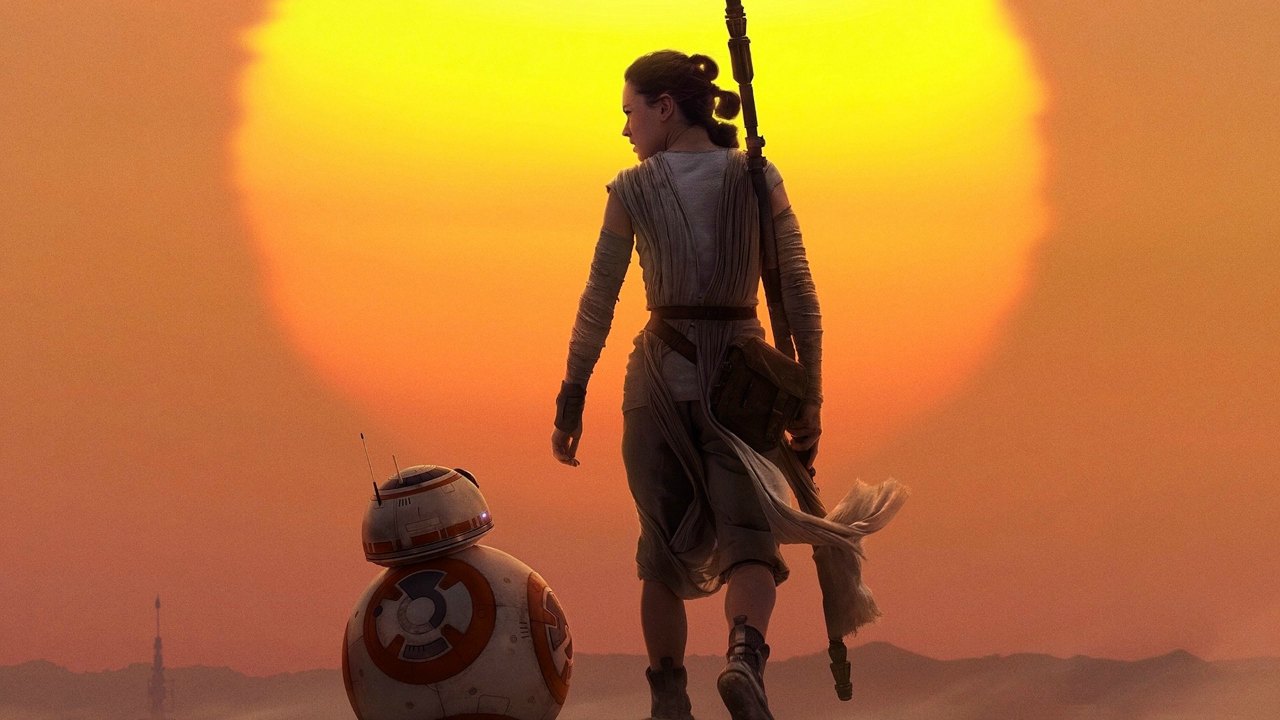
Spoiler-free Movie Review of Star Wars: Episode VII – The Force Awakens:
I saw The Force Awakens Thursday night it’s now Tuesday morning. It’s taken me this long to put together my review frankly because I’ve never felt so completely conflicted about a Star Wars film; seldom about any film at all.
This is going to be a long review, so let me start off with a short breakaway piece that will let you know if you want to read the whole thing:
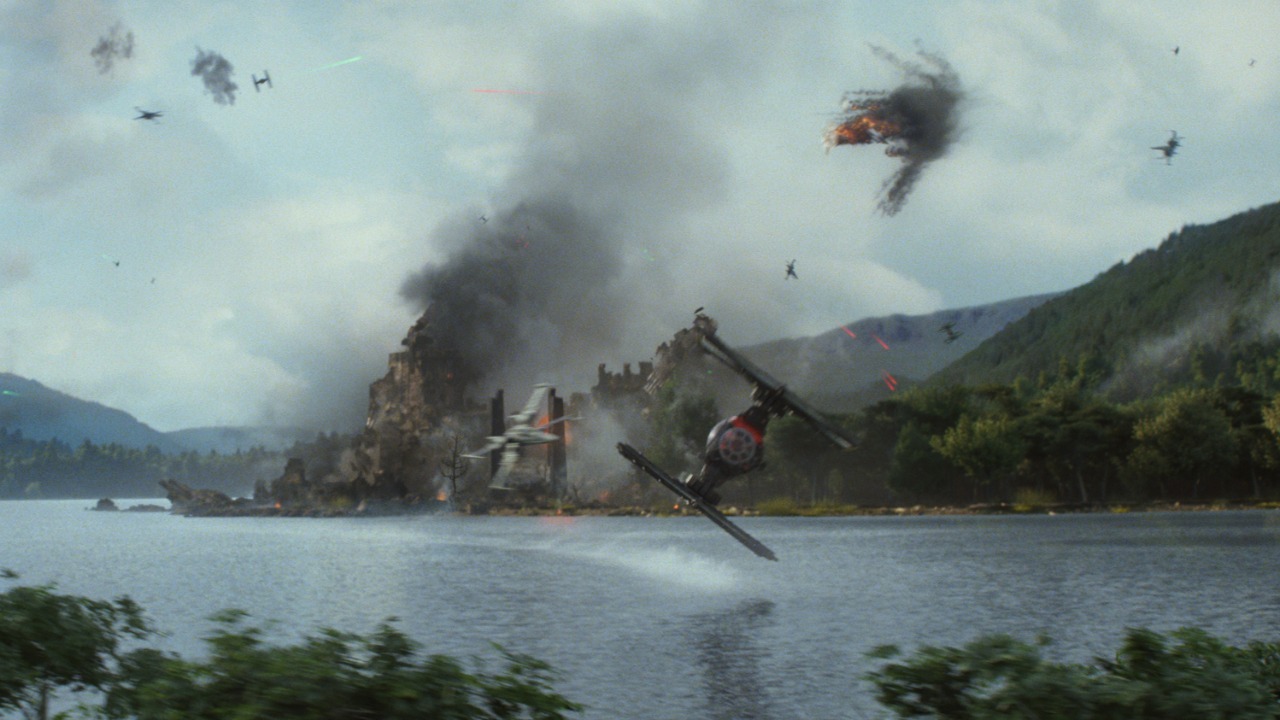
The Force Awakens is a fun, good looking and sounding movie that tries to give the people what they want and mostly succeeds, launching a new era of Star Wars films. I enjoyed myself.
The Force Awakens is also a derivative, unnecessary and possibly cynical launch of a new series of cash cows films that fails to give the people what they need, creating more questions than it answered. I felt frustrated by it.
Chapter 1: The Questionable Motivation
I really don’t want to seem down on Episode VII, but I’ve been struck with the same feeling since the moment they announced it – I wish they weren’t doing this.
Not that I didn’t want more Star Wars movies, I just didn’t see why they had to go back to the cast of the original films and try to pick up where they left off. You can’t recapture lightning in a bottle. That starship had sailed 30 years ago. The continuing stories of Leia, Luke, Han, Chewie and the droids were covered extensively in the pages of countless books. Some were brilliant, some were dreadful, most were great for what they were.
I would have been much happier if they had left well enough alone with those characters. If they wanted to make new films, go far into the future or into the past. Or if you absolutely must set this in the timeline where they did, use the Expanded Universe material as a jumping off point.
I’ve gone on at length about my disapproval of the decision to discard decades of Expanded Universe stories, relegating them to “Legends” so that the new filmmaking team would have room to work in. It was a cynical, short-sighted and lazy move that was disrespectful to the fans and creators of hundreds of authorized stories. I’m not going to bore you with it here (I’ll bore you with it here and here). I will merely say this: when you cavalierly chose to ignore everything that came before in favor of the stuff you are creating now, you really set a bar for yourself. Everything you create has to be better than what you discarded. It has to. It may not be a fair standard to be held to, but you set it. Every time you invent a planet instead of using one of the meticulously created ones created and then crafted by a number of different writers, it needs to be special. Because otherwise, why didn’t you just use what was already there? Similarly and much more importantly, if you decide what the characters went on to do after Return of the Jedi, it had better be damn good.
Chapter 2: The Maker Strikes Back
I’ve often blathered on throughout this site about the perils of creating something solely to satisfy what you think the audience wants. Seeing what has worked before and then trying it again, being reactionary and trying to distance yourself from past (perceived) failures; that’s how companies work, it shouldn’t be how art works.
The whole feel of the picture, the entire conceit, is and has always been – “capture the feel of the originals”. With a very closely attached – “don’t make this like the prequels”. I have a problem with both statements. In the first, the Original Trilogy didn’t have one “feel” – each of the installments was decidedly unique. The perception is that they all had a “fun” sensibility, and it’s true up to a point, but the reason they worked so well is that there was a lot going on under the hood – a full range of styles and themes. So copying the “feel” of something is tricky. (My issue with the second aim is simply that you shouldn’t set out with a negative imperative – defining yourself by what you’re not.)
George Lucas had a fairly damning quote about the movie, which was misinterpreted as praise. “I think the fans are going to love it. It’s very much the kind of movie they’ve been looking for.” Ouch. That’s some backhanded compliment. Looks like the Notorious GL knows how to throw some shade…
Lucas was clearly badly burned by public backlash to his prequel films to the extent that he wanted nothing to do with making more films to be criticized for. In the years since Revenge of the Sith, he groomed Dave Filoni and his creative team to continue the saga through projects like The Clone Wars in the manner Lucas envisioned. He often stated that he was “teaching them how to make Star Wars”. It’s just my personal opinion, but I imagine that Lucas would have considered Filoni a worthy successor had the desire to make new feature films returned.
When Lucas retired and wanted to ensure the future of his legacy, he chose an executive in Kathleen Kennedy who was more than capable of overseeing the type of film he and contemporary Steven Spielberg mastered. But he also then sold Lucasfilm to Disney, and in so doing gave up the reins to his saga once and for all.
At the time of the sale, Lucas turned over his story treatments for Episodes VII-IX, believing that there was no one more qualified to come up with the future of the franchise. He initially acted as creative consultant on the picture and reportedly hand-picked Abrams and screenwriter Michael Arndt. But Lucas’ plans weren’t what Disney had in mind, so they dismissed Arndt (who rightly still receives a credit on the film) and went in a new direction. I believe Lucas was genuinely shocked that his ideas would be cast aside. I think he truly believed that he would still be a part of his franchise even after passing it on to the next generation, and the rejection of his input has him feeling a bit jilted and possibly bitter. Which is all completely understandable.
I mention all of this by way of saying that I understand the context for his comment, yet maintain that it is a valid criticism. Lucas knew that the filmmakers were lobbing a softball to fans and that it would be a hit. But he studiously avoided being pinned down on saying if it was a good movie. He knew it wasn’t.
Chapter 3: Always Two There Are…
The Force Awakens is really two movies, only one of which I actually liked.
It feels odd to actually have such disappointment over a franchise that has been so reliably my favorite for so long and I think the delay in finishing and publishing this review is because oddly enough I felt a little guilty about writing anything so negative about it.
The fact remains that The Force Awakens is the least effective and most disappointing Star Wars film of all time. That’s quite a comment I know, and yes, I’m including the prequels in there. I can honestly say that I felt more disappointed and less satisfied walking out of Episode VII than with any of the prequel films.
By the standards of trying to create a single film, The Force Awakens is a spectacular failure. That sounds really bad; the truth is it’s nowhere near that bad. I really enjoyed the movie mostly.
The core problem is trying to serve two masters; the film is attempting to create engaging new characters, situations and settings and launch a new brand (a relaunch, really), while simultaneously trying to cater to older fans of the original trilogy. That’s hard to do, and it doesn’t.
The first part of that mission succeeds; the new characters of Rey, Finn and Kylo Ren are fantastic – really interesting. I absolutely adored the first 40 minutes or so of the film and was completely spellbound. After that, the power coupling came off the alluvial dampers, with the focus on the whole nostalgia factor.
Chapter 4: Return of the Grump
I get it – no, I do. I’m generally very favorable to that sort of thing, but just as with that other Star franchise, the split mission created a little bit of a problem. The Force Awakens reminded me of nothing so much as Star Trek: Generations, that awkward attempt to turn the nineties television program Star Trek: The Next Generation into a feature film while shoehorning James Tiberius Kirk in there somehow and for pretty much the same reason. They wanted people to stick with the character they love you so much in Kirk and knew that there was a large group of filmgoers who would not go to go see any Star Trek film that did not have Bill Shatner. See, that right there is the problem – not that they needed to have Kirk in there, that they needed to have Shatner in there.
This is true with The Force Awakens as well and echoes a problem I’ve talked about ad nauseum on this site: adjusting your film around an actor instead of changing the actor to suit the film. Because they were able to talk perpetual grump Harrison Ford into being in the film, he is completely over-used; not because he’s Han Solo but because he’s Harrison Ford. The actor/character’s screen time is completely out of proportion to his story importance and it leads to this really bizarre conflicted film in which you have the better instincts of story creation saddled with previous installments and previous characters.
Almost the moment that Ford appears on screen the entire pace of the movie gets thrown way out of whack. The first part of the film has wonderful pacing to it as you learned about these characters Finn, Rey, Poe and to a lesser degree Kylo Ren. It is exactly as you would want it to be it; the film has a wonderful feel to it – there’s a spark of excitement and energy but there’s also some mystery and a general Star Wars feel. But then pace of the film gets really fast in a real big hurry and it completely changes the mood of the piece. Everything towards the back half just starts to speed up incredibly.
Now that might be considered an editing problem, but it’s not – it’s a story problem and I’ll tell you why. The principal fault with Star Wars: Episode VII – The Force Awakens is that it creates more questions than it answers.
Chapter 5: The Phantom, well, everything…
I actually experienced the unusual feeling of walking out of a movie with more questions than I walked in with. This should never happen. Forget that it’s a Star Wars film, this shouldn’t occur in any picture. Movies have to stand on their own feet, despite whatever connective tissue there is with other installments. No Star Wars movie has ever failed so completely to stand alone on its own merits than Episode VII, which is pretty amazing when you consider that it’s the first film in a trilogy. The middle film in a trilogy is by definition reliant on the movie they came before it and the movie following it up. Think Episode II, Episode V or the upcoming Episode VIII. So it’s even less sensible for this to happen with the first film of the new series. Not only do I not know more about where they’re going with this franchise after seeing the film, I think I know less. This is completely unacceptable.
For those of you who are rejecting this concept let’s put it into a little bit of perspective; think about The Phantom Menace. Yes, I’m going to make you think about The Phantom Menace – for some of you this will be unfairly unpleasant memory (not myself – see my review). Before The Phantom Menace came out everyone had a lot of speculation based on the early glimpses we saw. After all, we were going far into the past into areas of Star Wars myth we had not yet seen.
What was the story with multiple Jedi? We’ve never seen multiple Jedi before.
Who is this mysterious Darth? We always thought that there was one Darth – Vader. Obi-Wan even called him Darth like it was his first name. Now there’s this new bizarre, horned character Darth Maul – pretty badass-looking but what’s up with the “Darth”? Is this in fact a title?
So we knew nothing about this character; they rightly kept it all very well hidden so we wouldn’t know what was going on; but at the end of Episode I you knew everything about it. Now there was a lot of entirely justified grumbling that for somebody who was hyped up so much he was barely in the damn thing, but you did have your questions answered.
Now contrast that with anything about The Force Awakens:
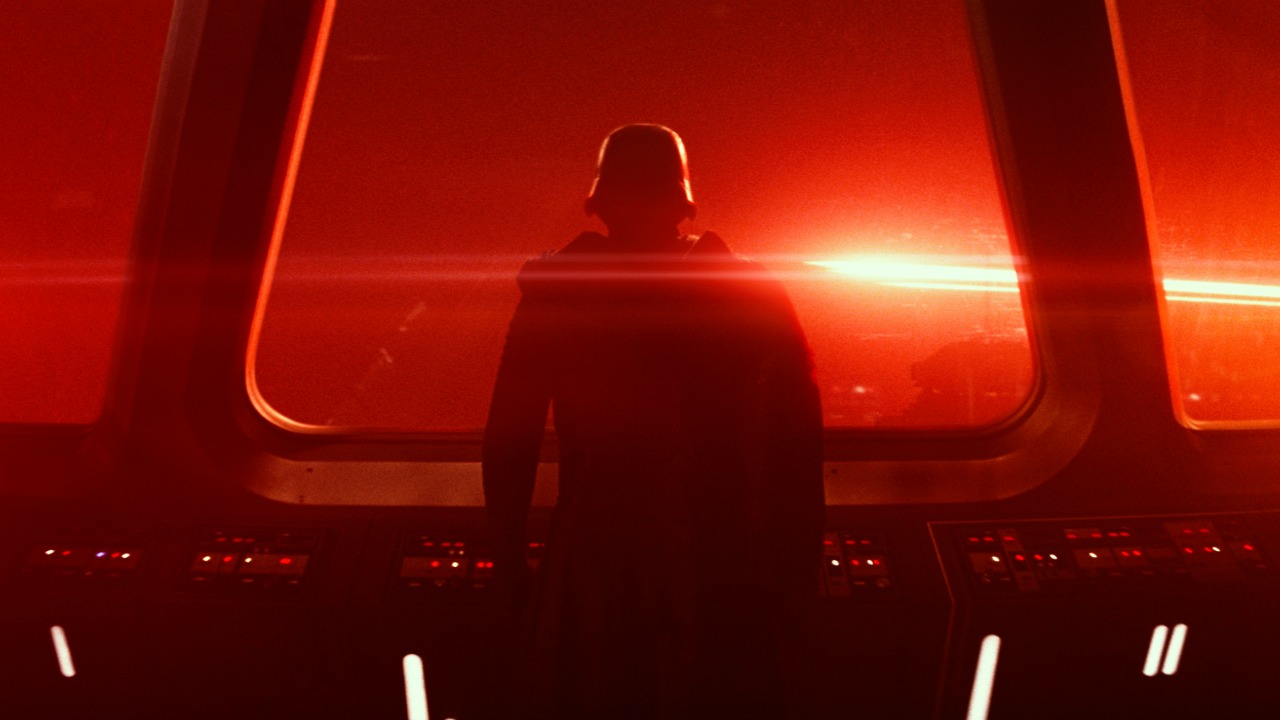
Who is this mysterious Kylo Ren? He’s got this weird lightsaber, is he a Sith? His name doesn’t say “Darth” in front of it. Is that meaningful?
Who is this Captain Phasma played by Gwendoline Christie? She looks so cool with this chrome armor thing going on – what’s that about? What is she captain of – what’s her role in this hierarchy? Ditto with Domhnall Gleeson as General Hux.
What about say any of the other characters that they’re creating?
Why does the trailer talk about the role of the Jedi passing into myth?
How did the Empire get back on top? Doesn’t that mean there needs to be an Emperor?
Why are they now called the First Order? I’m sure that’s some kind of Third Reich parallel, but how could they possibly be first of anything if they look exactly like the Empire?
The guys in X-wings are part of the Resistance; resisting what? Is the Republic back in power or not?
These are all questions you will not have answered. That’s not really a spoiler. In point of fact, I actually found it easier to do a spoiler-free review of the movie than I ever would have expected – because you don’t learn anything. You will walk out of the movie knowing less about the new direction of Star Wars than if you had not gone in at all.
Chapter 6: A New Hope Awakens
The picture really is deja vu all over again. It’s clear that they’re trying to invoke the spirit of the previous films, A New Hope especially, and as far as it goes that’s a good goal. The problem is that it doesn’t play anything like A New Hope in terms of clarity, simple storytelling, or really just about anything else. The MacGuffin in this film is truly ridiculous.
In all Star Wars films a lot of pressure is put on the opening crawl, particularly when there’s been a sizable period of time in between pictures. Really one of the reasons The Phantom Menace got off to such a bad start was by talking about trade routes in those floating yellow letters. You immediately were nervous and put on the defensive.
As I say, this is a spoiler-free review so I won’t be getting into detail, but I will say that the opening crawl for The Force Awakens isn’t very satisfactory. In fact it’s one of the real problem right at the gate – you’re expecting a lot in terms of backstory considering that 32 years has passed since the last film both in actual time and screen time. You’ve got some ‘splainin’ to do. But they don’t; there is really almost nothing added to help explain what’s been going on for the past three decades.
I’d been putting a lot of hope on this one, given that there were going to be questions that needed answering, but I didn’t let a vague opening crawl ruin anything for me and still remained incredibly optimistic.
I had the time of my life for the first part of the film. I really cannot overstate how good of a job was done with the casting and writing of these new characters. Daisy Ridley as Rey is fantastic – an instant star. Rey is a long overdue female protagonist who is almost certain to be as iconic and important as Princess Leia herself. John Boyega, who I previously had seen only in the immensely enjoyable Attack the Block, is equally perfect in his role as Finn. This is an incredibly charismatic actor who’s got a very good role to match and is totally suitable for him. Rounding out the new big three, Oscar Isaac is fun as Poe Dameron. Isaac has already proven his bona fides so I suppose that makes him the Harrison Ford of this bunch, although I don’t really want to settle anyone with that legacy. Both the character and the actor acquit themselves marvelously; this is someone I want to spend more time with, which is why it’s such a damn shame that I’m not going to – because instead I’m going to be saddled with the grumpy Ford for most of the rest of the picture.
This is what I mean – you created great new characters but then I don’t get to spend enough time with them because you’ve loaded the story down with characters who have already gotten their time. It’s like tossing Leonard Nimoy into the similarly J.J. Abrams-helmed Star Trek reboots. I really enjoyed those films, but Nimoy still felt strangely out of place.
BB-8, by the way, is exactly as adorable as he seemed in all of the trailers. I love the little guy – he’s fantastic, a new fan favorite.
Chapter 7: Revenge of the Nostalgia
If I’m grousing that the inclusion of the older characters shortchanges the new ones don’t misunderstand – it shortchanges the old ones, too. Other than Ford, who’s in there because he’s Ford, all of the original characters get short shrift. Despite their presence in the trailers in the ads and all of that stuff you barely see them. It’s disrespectful to bring people like Anthony Daniels, Peter Mayhew, Kenny Baker and other back but then underuse them.
I really truly mean it when I say that I wish they had just not bother to try to do this in the first place. I wish they had tried to go for a new story entirely, or failing that, if they wanted to have the original characters in there, pick up the story five years after Return of the Jedi or ten years after Return of the Jedi and recast the roles. I know that sounds like sacrilege but it really isn’t. The stubborn insistence on using the actors that everyone knows and loves, myself included, dictated the kind of story you were going to tell. If you weren’t able to do an Episode VII back in the day when these actors could still play it then you should have done something entirely different.
I knew that there was going to be a lot of pressure on the opening film and that by the second one you’d be enjoying it much more. That still remains the case; I went into the movie knowing I was likely to enjoy Episode VIII far more than I likely would VII. I did not expect that I would be going to Episode VIII still wondering where are they going with this new version of the Wars, and that’s unacceptable. I really just can’t get past the fact that they’ve taken no trouble to explain any of the backstory here; it desperately needs explanation. Three decades have passed and we’re still watching stormtroopers and rebels. I don’t get it. If The Force Awakens seems slight, derivative and played strictly for nostalgia that’s because it is.
Chapter 8: Attack of the Mouse
Now I can tell the momentum propelled me to a more negative review than I wanted. In fact, I wasn’t really sure that I could do a review at all when I had such mixed feelings about the film. I didn’t really want to be so negative about it and I still plan on amending this review once I’ve seen the film the second time, which leads me to my final problem; I felt instantly that I had to see the movie again. Now from a corporate marketing standpoint that may be fantastic, learning that your film is the cinematic equivalent of crack cocaine, but for the rest of us that’s not a good thing. Despite the fact that we live in this binge culture and I am a geeky fanboy who likes to watch things over and over and over again, your film shouldn’t actually require that. This is a major design flaw and signals that you have failed to do your job is a filmmaker. If your movie doesn’t make sense the first time and leaves the audience with the feeling that they need to see it again then you have been unclear. Despite the proliferation of fanboys, most people see movies once – they don’t need to see it two and three and four times. If you require them to do so, you’re making a tragic error.
Chapter 9: Staring at the Twin Suns
I wanted to love Star Wars: Episode VII – The Force Awakens. I may still come to love it. More likely I’ll learn to accept its flaws and enjoy the parts that made me feel like a kid again. Because those moments surely are there. Despite my many criticisms of the film, I remain hopeful for the series. It still has more lightsabers than any other film franchise…
[schema type=”movie” url=”http://www.starwars.com/films/star-wars-episode-vii-the-force-awakens” name=”Star Wars: Episode VII – The Force Awakens (2015)” description=”Three decades after the defeat of the Galactic Empire, a new threat arises. The First Order attempts to rule the galaxy and only a rag-tag group of heroes can stop them, along with the help of the Resistance.” director=”J.J. Abrams” producer=”Kathleen Kennedy” actor_1=”Daisy Ridley” actor_2=”John Boyega”]